Get Full Government Meeting Transcripts, Videos, & Alerts Forever!
Get email alerts on the Equity Cabinet Budget topic
No spam. Unsubscribe anytime.
City Council hears concerns as equity cabinet faces grant cuts and staffing gaps
Summary
At a May 12 budget hearing, Boston councilors and community members warned that proposed FY27 reductions to the Equity Cabinet's grant lines will curtail community programs and urged hiring for key fair-housing positions; administrators said personnel are being preserved but grants will shrink.
Ben Weber, chair of the Committee on Ways and Means and the District 6 councilor, opened the hearing and framed the session as part of the council's multiweek FY27 budget review.
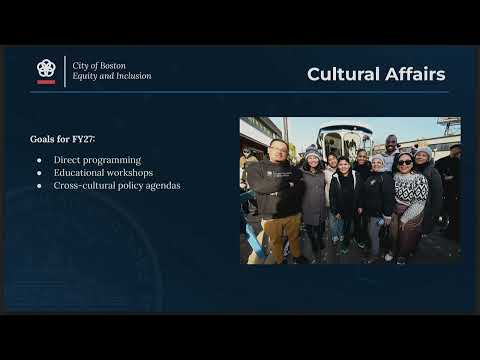
The chief for the equity cabinet presented an overview of the cabinet's mission and growth, saying the cabinet expanded from fewer than 30 staff in FY22 to more than 80 and that "we are not cutting personnel or programming" for FY27. She also acknowledged cuts to grant-making that will materially affect community partners and said the cabinet will continue technical assistance and policy work.
Directors of the cabinet's offices described their priorities. Frank Farrow, director of the Office of Black Male Advancement, outlined programs including mentoring, workforce pathways and housing mobility and said the office's grant program had supported thousands of residents and "we have provided over $2 million to community based organizations" since the office began. Mike Etter, deputy chief of operations for the equity cabinet, described the scope and limits of the Office of Fair Housing and Equity's intake and enforcement authority and said the city aims to issue a multi-year fair-housing testing RFP in the coming weeks.
Councilors across the chamber praised the offices' work but repeatedly pressed presenters for specifics: how many positions the cabinet contains, current vacancies, how centralizing administrative functions will affect small offices, and precisely which grants would be eliminated. Councilors and panelists repeatedly returned to the same concerns: many small community organizations rely on mini-grants and community empowerment awards (often $3,000—$25,000) to sustain programming, and the proposed FY27 budget would sharply reduce or pause those awards for several offices.
Presenters said personnel counts would be shared and emphasized that, while staff-based programming is intended to continue, contract and grant lines are the primary reductions. For fair housing, staff said no testing contract exists yet but that a formal RFP is being finalized; for the Human Rights Commission, officials said the city had not staffed that commission for years and that many of its functions are being absorbed by other departments, a choice some councilors challenged as effectively defunding an ordinance-based body.
Public testimony reinforced the councilors' concerns. Community leaders and nonprofit directors said small grants sustain prevention programs, mentoring and outreach that would not survive the loss of funding; several called for the city to restore grant lines and expedite hiring for the fair-housing director and investigators.
The committee adjourned with multiple follow-ups requested: a roster of affected grantees, vacancy and position counts, the fair-housing RFP text and a timeline to hire a permanent fair-housing director. The council set a second hearing in the afternoon on related equity offices.