Get Full Government Meeting Transcripts, Videos, & Alerts Forever!
Get email alerts on the Stormwater Infrastructure topic
No spam. Unsubscribe anytime.
Jamestown presenter outlines $5.5 million channel‑cleaning project; city faces $1.1 million local match
Summary
City staff presented a plan to remove roughly 14,000 cubic yards of sediment from 1.2 miles of maintenance channels to reduce flooding; New York State DOT has allocated an estimated $5.5 million but the city must provide a 20% local match (~$1.1 million).
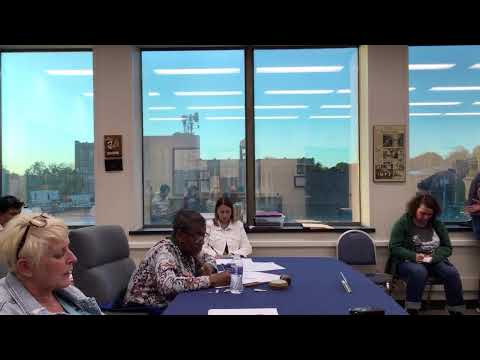
Mark, a public works presenter, told the Jamestown City Council the city is planning a multi‑year project to clean about 1.2 miles of maintenance channels behind Jackson Chandler Park and along Jones and Gifford to improve stormwater flow.
The project, Mark said, would remove an estimated 14,000 cubic yards of sediment — roughly 1,400 to 2,000 truckloads — and would likely require creating temporary access trails, establishing dewatering areas, and performing wetland mitigation. New York State Department of Transportation has allocated an estimated $5,500,000 for the work, he said, but the grant carries a 20% local match, leaving the city responsible for approximately $1,100,000.
Mark said the work can be broken into segments to spread costs across construction seasons and stressed the need for ongoing maintenance so the channels are not neglected again. He said the city is pursuing several strategies to reduce the local share, including applying for New York State Department of Environmental Conservation (DEC) grants, asking the county to lower landfill tipping fees, working with local nonprofits and watershed groups for mitigation assistance, and using city or county equipment where permissible to lower contractor costs.
A council member warned that federal allocations cannot be used to offset the city’s required local match; an elected official clarified that congressional funds and other federal grants generally cannot be applied toward the match requirement for state allocations.
Council members asked how the project would reduce neighborhood flooding. Mark said dredging 2 to 4 feet of sediment would increase storage capacity in wetlands adjacent to the channels and lower the frequency and depth of overflow onto streets such as Jones and Gifford and behind Jacksonville Park. He noted some sections will remain too wet for equipment and will require water dredging techniques and that certain contaminated material will need to be hauled to the county landfill.
If the council approves a forthcoming state‑local agreement next month, Mark said engineering work could start about four to five weeks after that approval and that the city will issue an RFP for an engineering firm to complete preliminary and final design work.
The presentation concluded with a reminder that final funding details — including any federal congressional allocation referenced by staff — remain subject to confirmation and separate internal review.