Get Full Government Meeting Transcripts, Videos, & Alerts Forever!
Get email alerts on the Budget Amendment topic
No spam. Unsubscribe anytime.
Blue Valley board approves amended 2025–26 legal maximum budget; no mill levy change
Summary
The board approved amendments to the district's 2025–26 legal maximum budget to accommodate higher special‑education transportation costs and other adjustments. CFO Jeremy McFadden said the changes increase legal expenditure ceilings but do not change the local mill levy; the motion passed unanimously after a public hearing with no speakers.
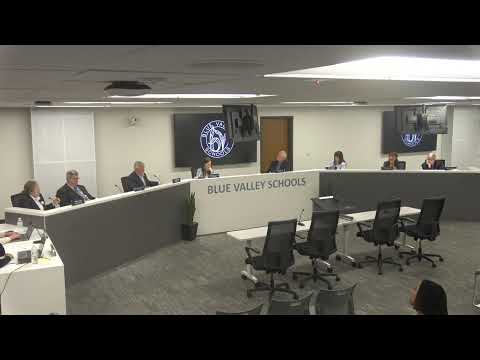
At a public hearing on May 11, Blue Valley Chief Financial Officer Jeremy McFadden presented proposed amendments to the district’s 2025–26 legal maximum budget covering three funds: the general fund, the career and post‑secondary education fund, and the special liability fund.
McFadden told the board that increased special‑education transportation costs — eligible for roughly 80 percent state aid reimbursement — and final state special‑education aid calculations require raising general‑fund legal expenditure authority so the district can accept and flow through additional state reimbursement. He said the request is to move the general fund ceiling from approximately $193,900,000 to about $195,200,000 to provide legal authority to record expected aid and related expenditures as they are finalized.
He said the career and post‑secondary education fund's legal maximum is being set higher in order to preserve contingency reserves and better align cash balances after discussions with rating agencies; McFadden said the board would see a legal maximum in that fund set near $7,000,000. The special liability fund amendment reflects higher liability defense and payroll costs; McFadden said he expects final expenditures in that fund to be roughly $1,700,000 and that interest income plus levied dollars will cover those costs.
McFadden emphasized that none of the proposed amendments would change the district’s mill levy or raise property taxes in the current cycle: "It's just giving ourselves the ability to flow through more special education aid if it comes our way at the May," he said. After the public hearing (no speakers), the board moved to approve the amended 2025–26 legal maximum budget as published; the board voted in favor by unanimous voice vote.
Board members asked clarifying questions about past survey comparisons, the omission of a tax‑increase probe in the bond survey, and the composition of fund balances. McFadden said staff will provide more detailed closing numbers as the district closes the books for the fiscal year.