Get Full Government Meeting Transcripts, Videos, & Alerts Forever!
Get email alerts on the Bond Survey topic
No spam. Unsubscribe anytime.
Blue Valley survey shows strong support for a $200 million facilities package when presented without a tax increase
Summary
A consultant reported high initial support for a potential $200 million facilities bond in a May 11 Blue Valley School Board presentation: a 500‑respondent telephone survey showed roughly 73% support initially and roughly 78% after project descriptions, and 84% support when told the package could be financed without raising property taxes.
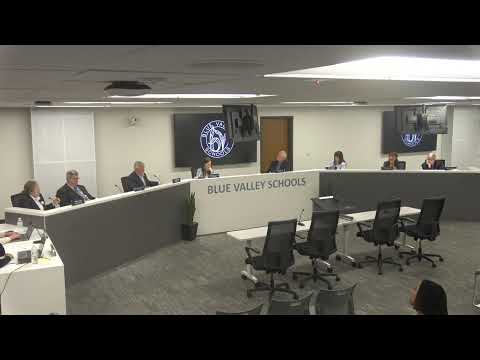
Don Lifto, a consultant with the Morris Leatherman Company, told the Blue Valley School Board on May 11 that a scientifically sampled telephone survey of 500 registered voters inside the district produced broadly positive reactions to a potential facilities bond package. The margin of error for the survey was ±4.4 percentage points. "This is as positive as it gets," Lifto said, summarizing the overall reaction to the package as presented.
The survey asked respondents first about a general facilities proposal and then presented 14 specific potential projects. Lifto said initial support for a general proposal was about 73.3 percent and rose to about 77.8 percent after respondents heard details about specific projects. For the group of top items, support clustered between 72 percent and 76 percent; a second set of items showed support ranging roughly from 55 percent to 71 percent.
Lifto highlighted a cost probe in which respondents were told the total was “around $200,000,000” and that, because of retiring debt, projects could be financed without a property‑tax increase. Under that financing scenario, he reported, 84 percent of respondents said they would favor the package.
Board members asked whether the survey had included an explicit question about a bond that would increase taxes. Lifto said it had not: the survey team did not ask about a tax increase because district staff told him that a tax increase was not being considered. "We did not ask about a tax increase," he said, adding that prior surveys had used the same approach.
The presentation included methodology details: the survey was a scientific random sample of 500 registered voters completed in mid‑to‑late April, included demographic weighting by age, gender, parental status and voting history, and used split‑sample wording on two items (for example, different wording for CAPS versus Center for Advanced Professional Studies) to test phrasing effects.
Superintendent Dr. Chapman and other board members said the results will inform planning for a possible referendum, and Jake Slavonic, the district’s chief operations officer, said staff would use the findings with the next steps for bond planning. The district has not scheduled a referendum; the survey was presented to guide that planning process.