Get Full Government Meeting Transcripts, Videos, & Alerts Forever!
Get email alerts on the Land Use topic
No spam. Unsubscribe anytime.
Knox County commissioners debate sending data‑center zoning language to planning commission
Summary
Commissioners debated a proposed resolution by Commissioner Fox to ask the planning commission to vet draft zoning language aimed at large data centers; debate centered on a 10‑megawatt local threshold tied to energy/water impacts, state law that defines 'data center' at a higher threshold, and concerns about land, noise and obsolescence.
Commissioner Fox on May 11 proposed sending draft zoning language for data centers to the planning commission for review, arguing the county needs a local floor tied to resource impacts. "I did put in a... floor for the circumstances under which this would apply, and it's for data centers that have a capacity of 10 megawatts or more," Fox said, describing the measure as focused on protecting residents' quality of life, water and electricity supplies.
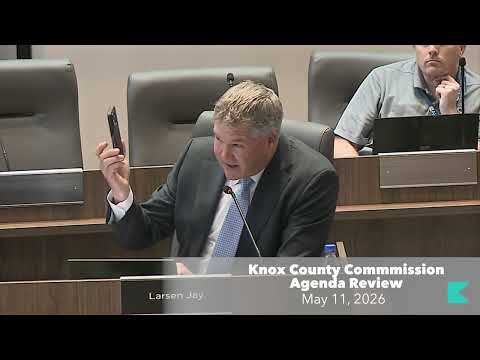
Opponents urged caution about narrowly tailored regulation and whether local rules would be overtaken by technological change. Commissioner Jay said, "By the time you pass this ordinance, whatever you think of a data center will be obsolete," and urged the commission to use existing legislative powers to deny projects rather than layering new rules that may quickly become outdated.
The law director clarified the process and limits of the commission's authority: amendments to the zoning ordinance are typically reviewed by the planning commission, which provides recommendations; the body does not directly decide uses on review. Commissioners also noted a state bill signed May 7 that defines 'data center' for state purposes as a facility projected to have a peak electric demand of 50 megawatts or more in the first three years and excludes certain state or telecom facilities. Commissioners discussed whether local thresholds should mirror state law or use a lower, locally focused standard tied to energy or water use.
Concerns raised by several commissioners included competition for land and water, noise, higher electricity rates for residents, and the short‑term nature of some employment gains. Commissioner Thompson said big data‑center projects can "dwarf what developers are paying for land" and argued their staffing needs are front‑loaded, producing only temporary local job growth. Commissioner Jackson referenced large national examples and urged the commission to consider whether projects of that scale would be appropriate for Knox County.
Supporters of local discretion said a local standard tied to megawatt capacity would allow the county to act where resource impacts are likely to be greatest and that the language could be revised later if technologies changed. Commissioner Fox asked the planning commission to vet the draft language and return with recommendations; several commissioners asked for a careful drafting process, including workshops to ensure telecom providers that supply essential services are not unintentionally restricted.
The agenda review was non‑voting; commissioners discussed sponsors and process steps. Commissioner Lee said he would sign onto the resolution. Any formal ordinance would return to the commission after planning commission review and public hearings; the law director noted that future commissions could revise or revoke any ordinance the board adopts.