Get Full Government Meeting Transcripts, Videos, & Alerts Forever!
Get email alerts on the Construction Wages Liability topic
No spam. Unsubscribe anytime.
Committee examines bill to shift construction COF enforcement to administrative penalties, add chain liability for unpaid wages
Summary
Lawmakers heard House Bill 260, which would replace criminal prosecution for certificate‑of‑fitness (COF) violations with graduated administrative penalties and create joint and several liability for contractors to address wage theft by disappearing subcontractors; state enforcement officials warned of increased hearing costs.
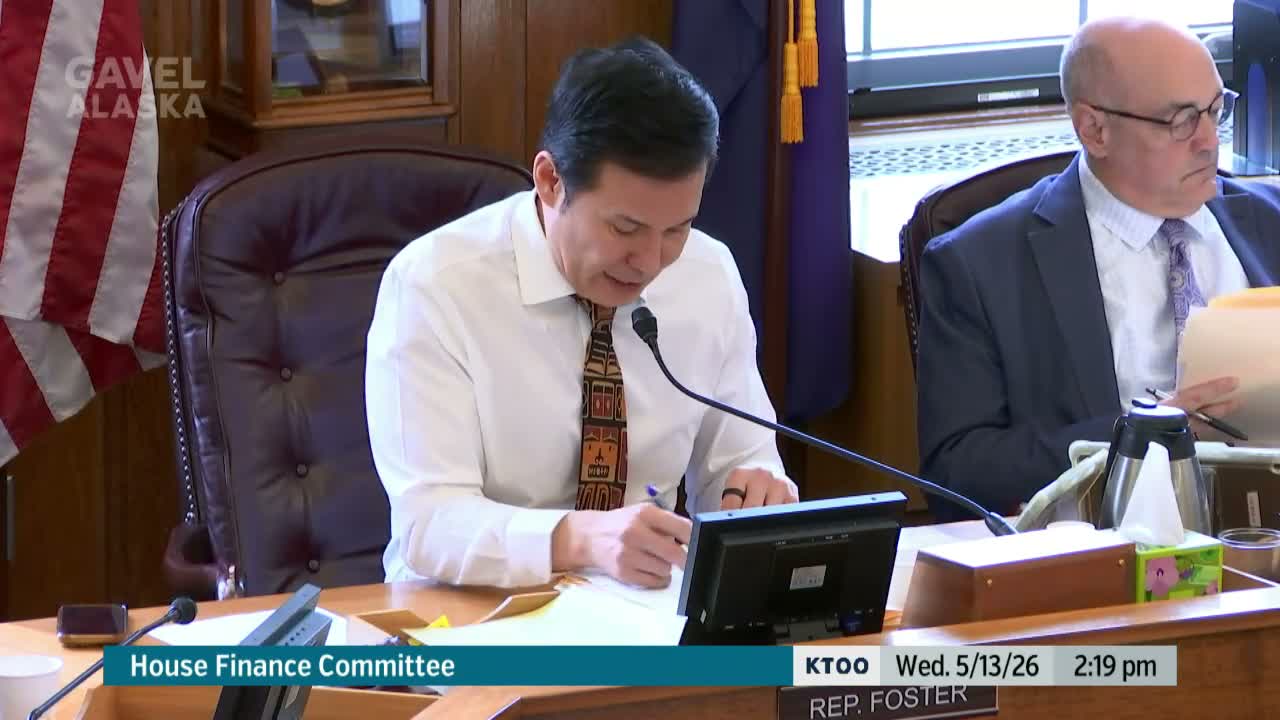
The House Finance Committee on May 13 heard testimony on House Bill 260, a construction‑industry measure that would replace a criminal misdemeanor for working without a certificate of fitness with an administrative, graduated penalty scheme and impose joint and several liability down the contracting chain to address wage theft.
Sponsor Representative Josephson summarized the bill’s two principal features: creating a graduated enforcement approach for COF violations — warnings, fines and removal or suspension of certification — and imposing responsibility on project managers and general contractors for unpaid wages when subcontractors disappear, while allowing subcontractors to submit payroll information and other documentation to rebut liability.
Sylvan Robb, director of the Division of Corporations, Business and Professional Licensing, put the fiscal note on the record and said the Division anticipates roughly $97,600 in FY27 and about $95,000 in subsequent years to cover legal and hearing‑related costs, to be paid from professional licensing fees.
Scott Dammerow, chief of mechanical inspection at the Department of Labor and Workforce Development, said the department expects enforcement demand to grow. “We are anticipating roughly 50 hearings per year for the first couple of years,” he told the committee, and estimated an upper‑range hearing cost of about $15,000 each because many cases are likely to be contested.
Committee members expressed concern that the bill, as drafted, could produce severe penalties for contractors who inadvertently commit multiple infractions on a single site visit. Representative Hannon asked whether the estimate of 50 hearings implied 50 cease‑and‑desist orders currently; Dammerow replied the proposed law would expand enforcement from a compliance model to a heavier enforcement posture and could increase citations substantially.
Sponsor Josephson and other members suggested drafting changes to avoid automatic lifetime bans or disproportionate penalties for what some described as paperwork or apprenticeship‑ratio errors, and noted the bill’s goal is to protect workers and public safety while preserving a proportionate enforcement approach. Several members urged clarifying language on how multiple violations arising from a single event would be treated.
The committee set the amendment deadline for bills on the agenda as Friday, May 15 at 5:00 p.m. No formal committee action on HB260 was recorded at the May 13 meeting.