Get Full Government Meeting Transcripts, Videos, & Alerts Forever!
Get email alerts on the Election Integrity topic
No spam. Unsubscribe anytime.
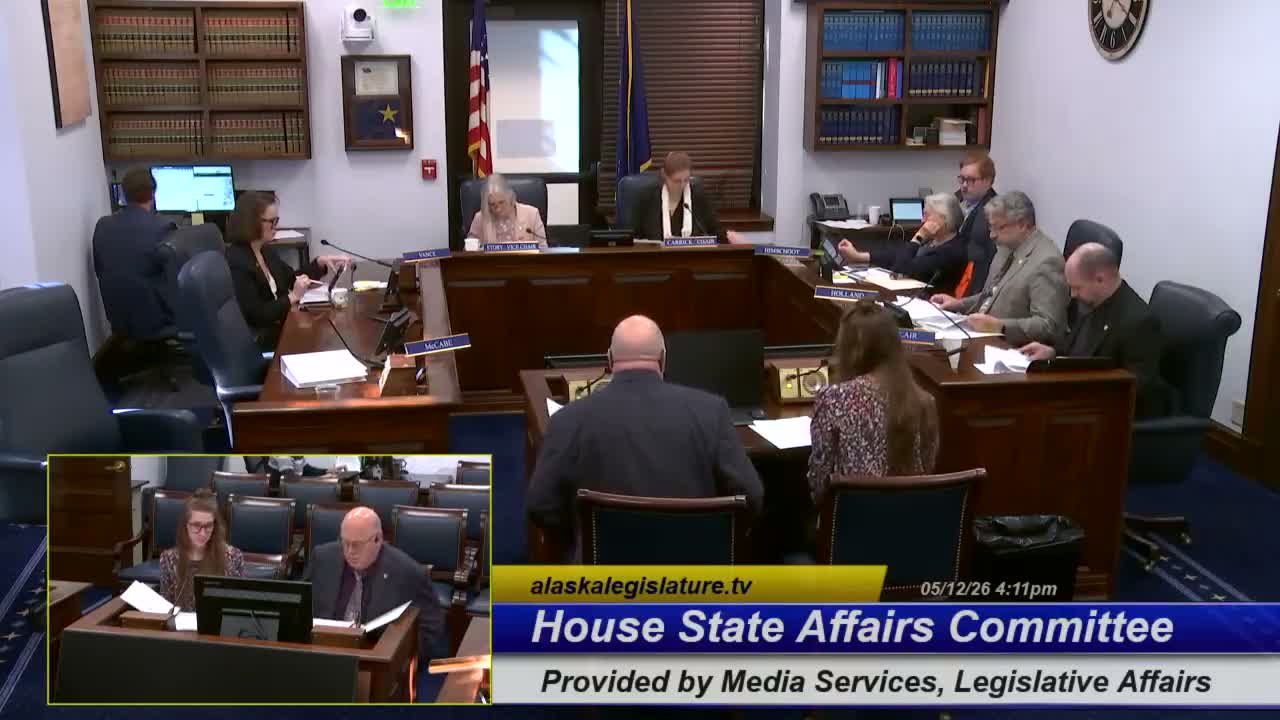
Lawmakers debate tightening campaign disclosure rules, bundling and 'reasonably known' thresholds
Summary
Representative Kevin McCabe reintroduced HB 371 to expand reporting and require Alaska addresses for groups active in state elections; members pressed for clearer language on bundling, a $10,000 threshold, and how 'reasonably known' would work in practice.
Representative Kevin McCabe told the committee HB 371 aims to strengthen transparency and accountability in Alaska elections by requiring organizations active in state elections to establish a physical Alaska address, tightening reporting for contributions and expenditures and disclosing when independent-expenditure groups draw substantial funding from outside Alaska.
McCabe said the bill would improve disclosure for bundled donations and coordinated fundraising and would not seek to limit speech: "The heart of this legislation is to strengthen transparency and accountability in Alaska's elections," he said. Committee members raised drafting questions, notably how the bill defines "reasonably known by the candidate," whether the $10,000 bundling threshold applies per individual or as a total, and how reporting periods align with election cycles.
Members described concerns about enforcement in practice — candidates frequently may not know whether contributions were bundled or originated from third parties — and asked if the bill could exempt standard PAC or union political-action arrangements. McCabe said the bill is intended to deter large-scale bundling that obscures the true source of significant funds while not capturing routine local organization PAC activity; he welcomed amendments and mentioned willingness to borrow language from SB 64 on "true source" provisions.
Chair Kerrick set an amendment deadline of 5 p.m. Wednesday, May 13, with the intent to consider the bill again at the committee's next scheduled meeting on May 14 if final action is possible. Committee members signaled interest in tightening language to clarify scope and to avoid unintentionally capturing ordinary local collective contributions.