Get Full Government Meeting Transcripts, Videos, & Alerts Forever!
Get email alerts on the Plastic Policy topic
No spam. Unsubscribe anytime.
Lawmakers hear bill to ban polystyrene food-service ware; sponsor and health scientists cite health and recycling concerns
Summary
Representative Andy Josephson presented HB25 to ban polystyrene in most food-service contexts and certain state procurement; witnesses testified polystyrene is nonrecyclable and poses health and environmental risks, and the bill was set aside for further consideration.
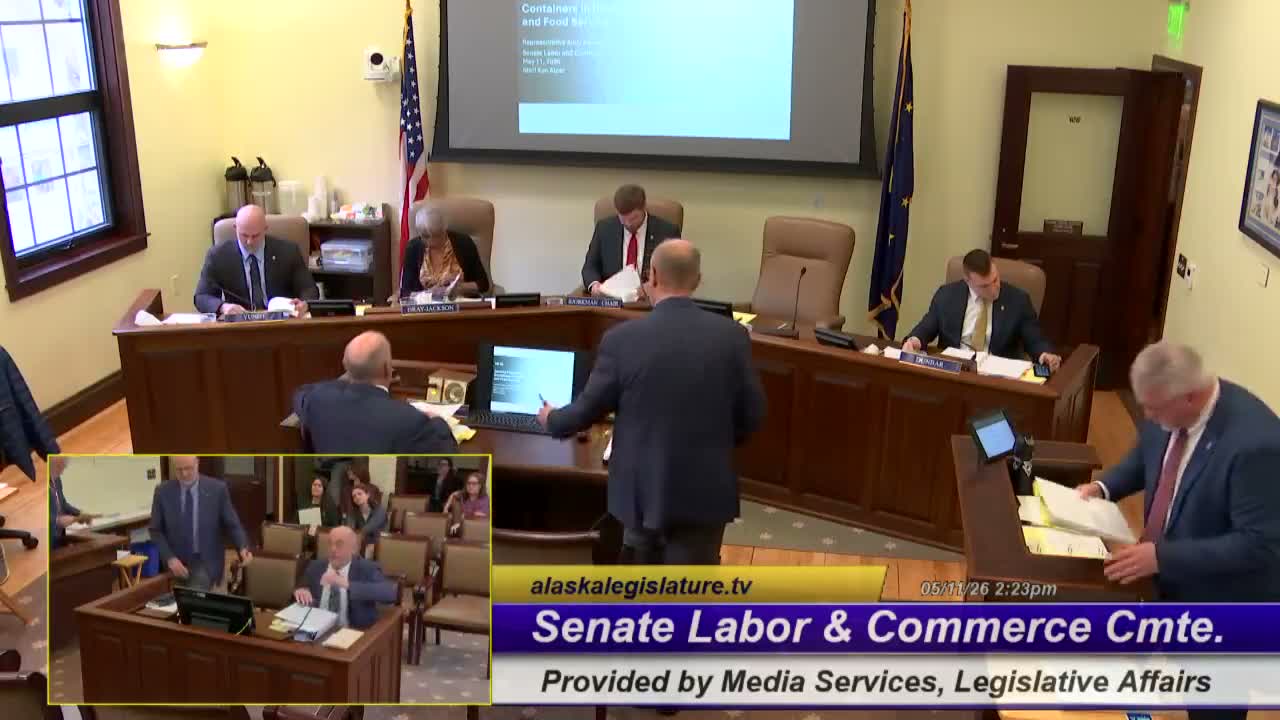
Representative Andy Josephson told the Senate Labor and Commerce Committee May 11 that House Bill 25 would ban polystyrene food‑service ware in restaurants and in certain state procurement, citing public‑health and environmental concerns and pointing to alternatives.
"This bill would ban the use of polystyrene principally in two ways," Josephson said, describing the focus on takeout food service and some state-run food operations such as ferries. He said the bill does not seek to ban retail sales of styrofoam products for home use and noted the draft permits existing stock to be used through Dec. 31.
Pamela Miller, executive director and senior scientist with Alaska Community Action on Toxics, testified in support and described polystyrene as persistent in the environment and linked to human and wildlife health risks. "Polystyrene is a hazardous material. It should not be used in food and beverage containers," she said, and argued that plant‑based alternatives are available and already in use by many businesses.
Sponsor staff said enforcement would be handled by the Department of Environmental Conservation (DEC) through existing restaurant inspection routines and noted the bill includes regulatory authority for DEC to allow customers to bring their own clean containers. Staff also said DEC provided a zero fiscal note for the measure because inspectors already visit food establishments.
Committee members asked questions about the scope and enforcement — including whether coolers and some items removed on the House floor were intended to be covered — and the bill was set aside for further consideration at a future meeting.