Get Full Government Meeting Transcripts, Videos, & Alerts Forever!
Get email alerts on the Master Fee Schedule topic
No spam. Unsubscribe anytime.
Pleasanton commissioners recommend updated recreation fee model to City Council
Summary
The commission unanimously voted to recommend that the City Council adopt a resolution updating Section 8 (Recreation) of the master fee schedule to a purpose‑driven subsidy model, raise the nonresident fee to 25%, revise refund timing to seven calendar days, and allow flexible adjustments tied to actual utility costs.
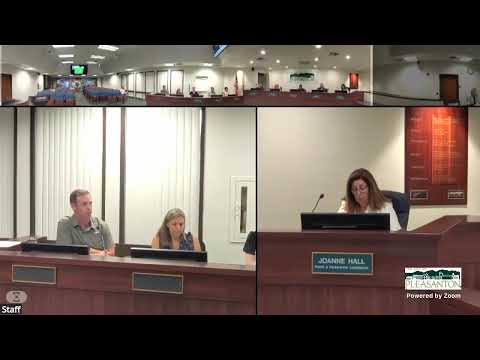
Pleasanton commissioners on May 8 voted unanimously to recommend that the City Council adopt a revised recreation section of the city’s master fee schedule aimed at making program and facility fees more sustainable and equitable.
Library and Recreation staff framed the proposal as a shift from fixed cost‑recovery tiers to a purpose‑driven model that sets maximum general‑fund subsidy levels by service category. “The long and the short of this is we are trying to get to a sustainable, equitable, efficient master fee schedule,” Nicole Thomas, Recreation Supervisor, told the commission during the presentation.
Why it matters: staff said the new model lets the city adjust prices when costs such as electricity rise without repeatedly returning to the commission. The proposal separates community events (often free and heavily subsidized) from seasonal special events (typically fee‑based), groups programs by purpose rather than participant demographics, and ties field and gym rental subsidies to community benefit.
Key changes and impacts: the proposal would (a) replace percentage cost‑recovery tiers with maximum general‑fund subsidy levels for categories ranging from broad community events to individual, discretionary services; (b) raise the nonresident surcharge from 10% to 25% so nonresidents pay a larger share of program costs; (c) change the refund policy so a $10 processing fee and select class charges apply to refunds made up to seven calendar days before a program begins; and (d) allow hourly increases (for example field light fees) to reflect actual utility costs.
Commissioners pressed staff on subjectivity and transparency. One commissioner asked who decides the “common good” ranking that determines subsidy levels; staff replied the approach follows national parks and recreation guidance and that staff maintain an internal mapping of programs to categories. Another commissioner and a public commenter asked for dollar‑level examples, noting that percentages can mask large dollar impacts; staff said actual dollar rates are posted on the city website and that council could request explicit dollar figures for certain rental categories if desired.
Public comment included a swim‑team representative who urged caution about relying on percentages, saying: “The percentages sound great but what does it mean in dollars,” and warning that undercharging had contributed to large operating losses at some facilities.
Vote and next steps: the commission approved a motion to recommend City Council adopt a resolution updating Master Fee Schedule Section 8 (Recreation) as presented. Staff said the changes are intended to align with the fiscal year start (July 1) if City Council approves the resolution and that some increases would be rolled out with group registration cycles.
The recommendation will be transmitted to the City Council for final action; staff said they will provide additional documentation and can convert selected subsidy categories into explicit dollar rates for council review if directed.