Get Full Government Meeting Transcripts, Videos, & Alerts Forever!
Get email alerts on the Regulatory Evidence topic
No spam. Unsubscribe anytime.
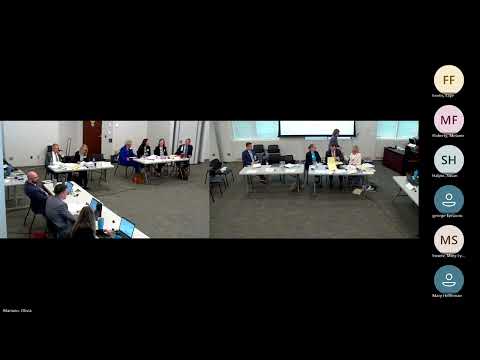
Hearing on Encompass Health Brantford application centers on late-file evidence and data requests
Summary
At a hearing on the Encompass Health Rehabilitation Hospital at Brantford application (pocket number 25-32826-Con), the presiding officer focused parties on late-file submissions, requests for Connecticut-specific readmission data and patient-origin figures, and whether proprietary materials must be filed confidentially; an order was promised the following day.
The presiding officer opened a hearing on the Encompass Health Rehabilitation Hospital at Brantford application and said the panel would move from technical and public comment portions to consider late-file materials and then closing arguments. The presiding officer identified the transcript as Exhibit DDD and an Earnings Call presentation as Exhibit EEE and invited parties to submit written responses to the newly introduced materials.
The officer instructed that “Ms. Chaffin will add LTAC to slide 6 of her presentation, recalculate that and provide that” as a late-file submission. Parties also requested admission-origin data for Danbury, specifically how many patients come from New York versus Connecticut, and sought Connecticut-specific readmission and potentially avoidable-hospitalization figures for inpatient rehabilitation facilities, skilled nursing facilities and long-term acute care hospitals. “The applicant indicated they hadn't looked at readmission rates specific to Connecticut,” the presiding officer said, and asked the applicant to provide those figures if available.
Participants flagged proprietary data and licensure restrictions as potential barriers to public disclosure. One participant asked whether purchased or licensed datasets needed to be submitted confidentially; the group agreed to confer off the record and by email to determine whether confidential filing procedures were required. Gaylord and other parties said they would check prior submissions and confirm whether redactions had been applied.
There was an evidentiary dispute over whether to admit additional analyses submitted late. Several speakers urged that follow-up analyses arising from the hearing be allowed; the presiding officer cautioned that admitting substantial new material at this stage could require rescheduling and additional response time and said they were “not inclined to allow that in” if it would cause extended back-and-forth.
The hearing officer said an order would be issued the next day with more-specific instructions on what the parties must file. The panel scheduled a separate meeting to review license restrictions and determine the appropriate handling of purchased data; parties acknowledged outstanding late-file items and prepared to move to closing arguments. The session went briefly off the record for administrative reasons.