Get Full Government Meeting Transcripts, Videos, & Alerts Forever!
Get email alerts on the Local History topic
No spam. Unsubscribe anytime.
Reno’s ‘divorce trade’ reshaped Washoe County’s economy and image, historian says
Summary
Historian Dr. Alicia Barber traces how liberal Nevada divorce laws and shortened residency rules—culminating in a six-week residency—made Reno a national destination from the early 1900s through the mid-1960s, fueling hotels, ranches, films and a lasting civic legacy in Washoe County.
Dr. Alicia Barber, a historian of Northern Nevada, says Reno’s rise as a national destination for migratory divorces was driven by two legal advantages—broad statutory grounds for divorce and short residency requirements—that together attracted visitors from across the country and reshaped Washoe County’s economy and culture.
"A divorce is a lawsuit," Barber told hosts Nancy Luenhagen and Bethany Ddale, explaining that in many states at the turn of the 20th century plaintiffs had to plead narrow grounds such as adultery. Nevada, she said, allowed multiple grounds (growing from seven to nine) and included a broad "extreme cruelty" catchall that eased the burden of proving cause in court.
Those permissive grounds combined with residency rules that initially required six months’ continuous presence to establish eligibility. Barber described how migrants—sometimes wealthy socialites—would live in Reno for the required period, file for divorce, and then often return home. After 1927 the legislature shortened the residency period to three months, and following gambling’s legalization in 1931 Nevada reduced the period again to six weeks, making migration more affordable and accessible.
"That shorter period...meant people of a lot more demographics could come here," Barber said, noting the economic ripple effects. Visitors needed lodging, food, legal services and entertainment, stimulating hotels, boarding houses and related businesses. Barber estimated that during the 1930s divorce-related spending brought about $3 million a year to the city, a significant infusion during the Depression.
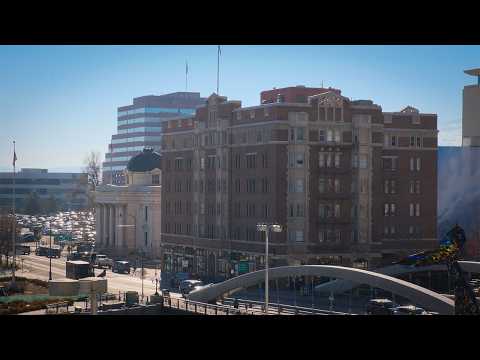
Local landmarks and businesses reflect that era. Barber pointed to the Riverside Hotel (now Riverside Artist Lofts), the El Cortez Hotel, and the Colonial Apartments (formerly Ross Manor) as examples of buildings that catered to long-term guests. She also described the guest or "divorce" ranches—such as Silver Circle Ranch and Whitney Ranch—that provided privacy and leisure for higher-end visitors.
Popular culture amplified Reno’s image: newspapers, magazines and films depicted courthouse scenes, wedding bands tossed from the Virginia Street Bridge into the Truckee River, and celebratory column-kissing on the Washoe County Courthouse steps. Barber traced how those images, plus celebrity cases and movies that referenced Reno, helped normalize divorce nationally and influenced later legal change in other states.
Barber also emphasized that the migratory trade was not monolithic: while early patrons were often wealthier, the shorter residency rules broadened the demographic mix, and historians have found important evidence about African-American visitors’ distinct experiences—segregated lodging and restaurants, and community support provided by local Black churches.
Some outsiders and religious groups objected to Nevada’s role as a divorce destination, Barber said, and periodic legislative attempts to lengthen residency were sometimes adopted and then reversed when civic leaders and local businesses pointed to the economic harm. "They extended [the residency] to a year" during one reform effort, Barber said, but legislators quickly reversed course when the economic effects became apparent.
Barber and local researchers have worked with the University of Nevada, Reno Libraries to document the era. A curated site, RenoDivorceHistory.org, contains photographs, oral histories and archival materials that illustrate how the laws, lodging industry, railroad access and popular culture together produced Reno’s national reputation.
The story, Barber said, is one of small legal changes producing outsized impacts: from residency rules and grounds for divorce to hotels, ranches, and civic buildings designed or occupied by people who arrived for divorce and then stayed. Those shifts, she argued, left a lasting imprint on Washoe County’s built environment and cultural memory.
The episode closes with hosts thanking Barber and directing listeners to resources and continued episodes in the America 250 series.