Get Full Government Meeting Transcripts, Videos, & Alerts Forever!
Get email alerts on the Elections topic
No spam. Unsubscribe anytime.
City election debrief: BOES flags Davis Hall problems, debates ranked-choice voting and mail-ballot options
Summary
Board of Election Supervisors reported a 9.9% turnout for the November general election, recommended moving polling operations from Davis Hall to City Hall's community room, discussed permanent vote-by-mail and mobile dropbox options, and presented a unanimous caution about adopting ranked-choice voting without major voter-education and operational investments.
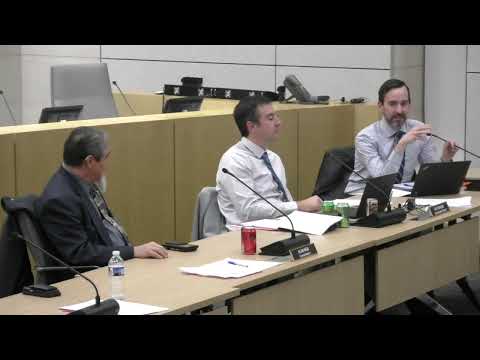
The citys Board of Election Supervisors (BOES) presented an operational debrief of the 2025 elections and led an extended council conversation on the possible adoption of ranked-choice voting (RCV).
"The use of Davis Hall as a voting location really is no longer a viable option," BOES chair Susan Humemerick told the council, citing privacy, ADA access and equipment-security concerns. BOES described the citys recent use of Clear Ballot tabulation hardware, the placement of a dropbox in each district, and statistics from the general election: 1,598 ballots cast citywide and a turnout of 9.9 percent.
Humemerick and other BOES members reviewed permanent vote-by-mail usage (including returned, undeliverable mailings) and described pilot outreach such as mobile ballot drop-off visits to senior high-rises. Council members and BOES staff discussed the trade-offs of shifting to an all-mail ballot model with a single in-person election day (the charter requires at least one in-person day), including per-ballot costs, potential increases in turnout, and county-level constraints on returned-mail handling and voter-roll maintenance.
BOES then presented its assessment of ranked-choice voting and recommended against immediate adoption. Staff warned the city would need a sustained voter-education effort and described administrative burdens in a low-turnout environment. "RCV is most useful when there are many candidates for a single seat and not just one or two," BOES said, arguing that past local contests produced clear winners under the current system and that the citys small electorates reduce RCVs advantages.
Supporters of RCV in the audience and on council countered that the system broadens voter choice and reduces spoiler effects. Council members requested additional study, expressed divergent views on whether to place the question before voters by referendum, and asked BOES to return with cost estimates for education and implementation. No policy change was adopted in the session.
Council and BOES agreed on other near-term operational steps: review of permanent mailing processes to reduce undeliverables and exploring relocation or additional polling sites north of Maryland 193 to improve access for neighborhoods north of Route 193.