Get Full Government Meeting Transcripts, Videos, & Alerts Forever!
Get email alerts on the Blast Testing topic
No spam. Unsubscribe anytime.
Presenter: 300-foot blast-tube test achieves record pressures and longer pulse durations
Summary
A presenter described a 300-foot blast-tube test that produced higher pressures and longer pulse durations than before, validated simulation predictions and generated new data to improve modeling and sponsor-tailored tests of classified or hazardous articles.
A presenter described a 300-foot blast-tube test that produced higher pressures and longer pulse durations than previously achieved and said the results will help validate simulation models used to plan future tests.
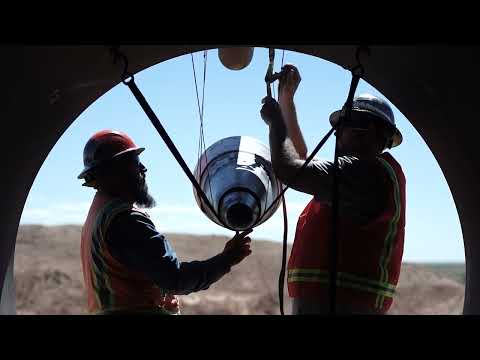
The blast tube, the presenter said, is "a facility designed to simulate blast environments on various test articles, buildings or aerodynamic structures" and lets engineers control pressure, pulse duration, shockwave and velocity to tailor tests to a sponsor’s needs.
The testing team worked with modeling and simulation specialists in advance to set safe charge limits and to avoid damaging the facility. "The simulations predicted that the supports in the tube would survive, and they did," the presenter said, describing the match between predicted limits and observed performance. The presenter added that the results were notable because the pressures achieved came with little damage to the facility.
The presenter emphasized the advantages of tube testing over open-air charges: because open-air blasts lose pressure as they expand, a blast tube allows operators to focus energy on a test article and achieve extreme repeatability. "We are able to work with different lengths, different tube diameters, different thicknesses," the presenter said, noting the facility allows heavy instrumentation that produces more data than tests where the article is moving.
The test included detonations the presenter described as "hundreds of pounds of explosives in and around this tube," and the team said it could test articles that are classified or contain hazardous materials. The presenter said the collected data are ‘‘data they’ve never had before’’ and will be used to validate and improve predictive models.
There was no vote or formal action reported at the session. The presenter said the next steps are to analyze the measurements from the recent tests and apply the results to future, sponsor-driven test programs.