Get Full Government Meeting Transcripts, Videos, & Alerts Forever!
Get email alerts on the Education Grants topic
No spam. Unsubscribe anytime.
REAP grant presentation: Vorhees team says $26.7 million would support teachers and students across Fairfield and Georgetown
Summary
At the Aug. 20 board meeting, REAP program leaders from Voorhees University presented a three‑year, $26.7 million grant proposal they said would support professional development, sign‑on bonuses and performance pay for roughly 850 teachers and nearly 11,000 students across 26 schools in Fairfield and Georgetown.
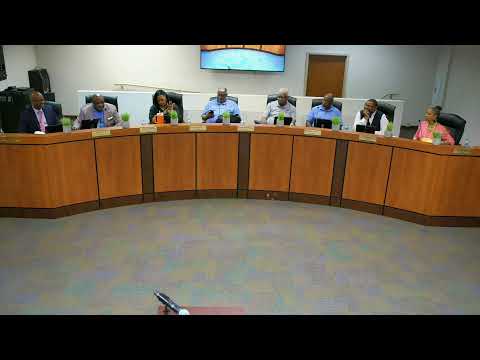
At its Aug. 20, 2024 meeting, the Fairfield County Board of Trustees heard an overview of the REAP (Rewarding Educator Achievement and Performance) grant from program director Alicia Trusdale Cotton of Voorhees University and her team. Trusdale Cotton said the three‑year grant would “afford us the opportunity to get access to over 26.7 million that will help support over 850 teachers and nearly 11,000 students across 26 schools in both Fairfield and Georgetown School District over a three‑year period.”
The presenters described REAP as a collaborative effort with district leaders to provide research‑based professional development, career‑ladder opportunities and performance‑based compensation without asking educators to perform work beyond their existing roles. Dr. Cynthia Wolf, the REAP professional learning manager, said the program will include supports for administrators, instructional coaching and multi‑year networks for new teachers.
Program components outlined to the board included national and research‑based partners for professional development (including district leadership supports and social‑emotional and early‑grade reading initiatives), a new educator boot camp, virtual instructional coaches, peer‑review evaluators and an app to centralize calendars and program materials for participating staff. The presenters said professional development and the program modules are required for educators who opt into the incentive program.
Trusdale Cotton and colleagues described how payouts will be determined. The plan pairs district evaluation components (the SC 4.0 rubric, peer observations and formative assessments) with student‑growth measures and student survey data. Presenters gave sample payout ranges tied to rubric scoring: participants rated “proficient” could receive about $1,250 and those rated “exemplary” about $2,000. They said administrators who meet school‑level growth thresholds could qualify for larger category payouts and sign‑on bonuses.
The REAP team also described a microgrant program for non‑classroom educators (custodial, transportation and food service staff were cited as eligible): eligible microgrants carry a maximum payout of $1,250, presenters said, and the team reported about 120 microgrant slots with roughly 70 already filled. The team said the participation agreement was open and that staff interested in sign‑on bonuses should apply by the date the presenters referenced (the team said the 23rd during the meeting).
Board members asked about program administration and communication. Presenters said district staff would push enrollment information to school‑level employees and that congratulatory emails to approved participants include directions for how to access the program app. The presenters emphasized that the grant pays for contracted professional‑development partners and program implementation costs.
The presentation was informational; the board did not take a formal vote on the REAP program at the meeting. Presenters said staff will continue outreach and onboarding for interested educators and that program payout calculations will proceed once district assessment and added‑value data are available.