Get Full Government Meeting Transcripts, Videos, & Alerts Forever!
Get email alerts on the Kratom Regulation topic
No spam. Unsubscribe anytime.
Revere Board of Health weighs ban or strict controls on kratom as experts warn synthetics pose higher risk
Summary
At its February meeting, the Revere Board of Health received expert and community testimony on kratom, heard that most retail products inspected locally are synthetic concentrates, learned about pending state bills to limit potency and labeling, and agreed to continue regulation discussions in March.
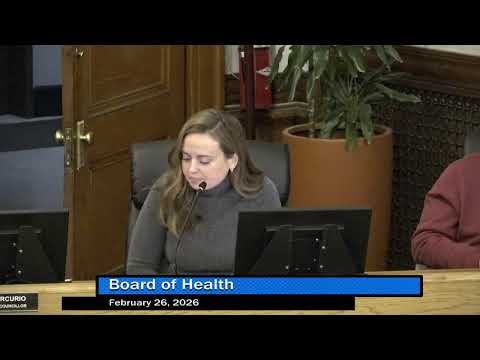
At its February 2026 meeting, the Revere Board of Health held an educational session on kratom, hearing from municipal staff, an academic expert and multiple residents as the board weighed whether to pursue a local ban or strict retail controls.
The discussion focused on a key distinction raised repeatedly by presenters: natural leaf kratom typically contains about 2% of the plant’s opioid‑acting alkaloids, whereas synthetic extracts can contain greatly higher concentrations and have been linked to addiction and overdose in other jurisdictions. "The synthetic kratom products have concentrations up to 98%," said Mark Gotautleb, executive director of the Public Health Advocacy Institute at Northeastern University School of Law.
Why it matters: Board members were asked to balance potential benefits some users report from natural leaf kratom against public‑health risks from high‑potency extracts widely available in retail and online markets. Buck and Gotautleb both warned that local enforcement is more straightforward for an across‑the‑board ban than for a potency‑based rule that would require testing and ongoing laboratory certification.
Lauren Buck, municipal public‑health staff, gave the board Revere‑specific data: staff surveyed about 40 businesses and found three selling kratom in forms ranging from seltzers to vapes and pills. Buck also reported zero poison‑control calls from Revere ZIP codes in the past two years but said the state had recorded 48 such calls in that period. "Only three businesses out of the 40 that we surveyed were found to be selling products," Buck said, noting her survey was not comprehensive.
Presenters reviewed enforcement models used by other Massachusetts municipalities. In Lowell, bans began after recovery centers raised concerns and three stores later received fines under the local structure. Canton used revocation of tobacco licenses as an enforcement tool. Buck cautioned the board that Revere’s board‑of‑health fine authority is capped at $1,000, and that enforcement would fall to inspectional services.
Public comment underscored the divide in community views. "This stuff's dangerous. Dangerous for the children," said Wayne (Rose Street), who urged immediate action. Another attendee, Mike Fischer, representing a pro‑leaf perspective, argued synthetic extracts should be banned while responsibly regulated natural leaf kratom could be subject to age restrictions and labeling requirements.
Gotautleb summarized the state legislative landscape and policy tradeoffs. He told the board that Massachusetts bills S4394 and H2454 advanced from Judiciary to the Ways and Means Committee and, if enacted, would require ingredient labeling, limit alkaloid concentration to levels comparable to natural leaf (about 2%), and impose age restrictions. "If that does pass, it will reduce the maximum concentration of 7‑OH to 2% and require warnings and age‑limits," he said, while noting there is "no guarantee" the state will complete action this year.
During a Zoom appearance, Bonnie Carroll of the Six City Tobacco Initiative added local enforcement context: based on her inspections in Revere, she stated that "90% of what I find in the stores is synthetic kratom."
Board action and next steps: No regulations or votes were taken. The board agreed the item was educational tonight and asked staff to place kratom regulation on the March agenda for further discussion and possible drafting of regulations and a public hearing. Lauren Buck outlined a likely process: policy drafting with the city solicitor, a 21‑day public‑hearing notice and, if approved, inspections, fines and appeals structured similarly to existing tobacco regulations.
The board closed the kratom discussion and moved to other business, scheduling continued consideration at the next meeting.