Get Full Government Meeting Transcripts, Videos, & Alerts Forever!
Get email alerts on the Enrollment Forecast topic
No spam. Unsubscribe anytime.
Wasatch County forecast: nearly 1,000 more resident students expected in five years
Summary
A Davis Demographics presentation to the Wasatch County School Board projected nearly 1,000 additional resident students by 2028, driven by active residential development and inward migration; the forecast flagged high-school capacity as the most immediate facility pressure.
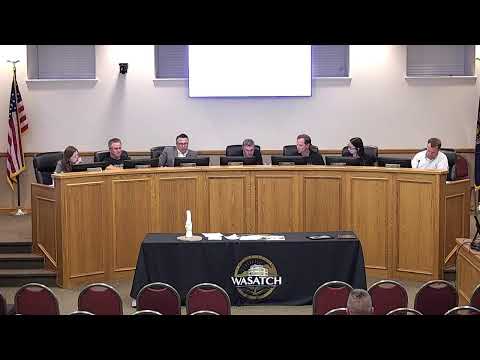
Marcy Horer of Davis Demographics told the Wasatch County School Board on April 23 that the district’s rapid residential growth is producing large enrollment gains and that the five‑year forecast projects nearly 1,000 additional resident students.
The presentation, delivered during the board’s regular meeting, laid out the firm’s methodology: geocoding district student addresses, analyzing birth cohorts, historic mobility (how cohorts change grade-to-grade), and student-yield — the number of students expected from new housing types. "I have never been so overwhelmed by the residential growth as I am here," Horer said during her remarks about visiting developments across the county.
Why it matters: the forecast combines internal student data with mapped development activity and shows that growth is concentrated in several study areas. Horer told the board the district will see larger increases in secondary grades and recommended planning for capacity changes rather than relying on single-year enrollment snapshots.
Key findings Horer highlighted include an overall projected increase of "almost a thousand resident students over the next five years, reflecting an increasing rate of 12.6%," with elementary grades growing modestly, middle grades rising and the high-school population increasing most sharply (the presenter cited a roughly 17% rise in the high-school cohort by 2028). The firm also reported that, despite a modest decline in birth rates, inward migration and new housing are the primary drivers of the projected growth.
Board reaction focused on facilities planning. Jason Watt, the district’s business administrator, said the maps and study-area data reinforced a previously discussed need for long-range capacity planning and raised the prospect of a second high school if growth continues in current patterns. Horer said the presentation is a baseline and that the firm will print a formal report and return for a work session where the board can delve into boundary scenarios and facility options.
Next steps: Davis Demographics will provide a formal report; board members asked staff to schedule a follow-up work session to examine redistricting and building-timing scenarios. The board did not take a facility vote at the meeting.
Provenance: Presentation began when Marcy Horer took the podium at the board meeting (presentation introduced at SEG 797). The forecast numbers and five-year projection were summarized during the presentation and closing remarks (discussion captured through SEG 1796).