Get Full Government Meeting Transcripts, Videos, & Alerts Forever!
Get email alerts on the Corrections Escape topic
No spam. Unsubscribe anytime.
Committee advances bill drafting on parole ineligibility after escapes from community correction centers
Summary
The joint Judiciary Committee directed LSO to make H.B. 170 a committee bill and approved an amendment to clarify parole ineligibility for inmates who escape or 'cause serious bodily injury' while in custody. Department of Corrections urged statutory clarity to avoid delays that have allowed parole eligibility to lapse.
The joint Judiciary Committee moved forward on statutory changes intended to close gaps in parole eligibility for inmates who escape from adult community correctional facilities. The committee voted to make H.B. 170 a committee bill and approved an amendment adding a serious‑injury trigger to the assault language.
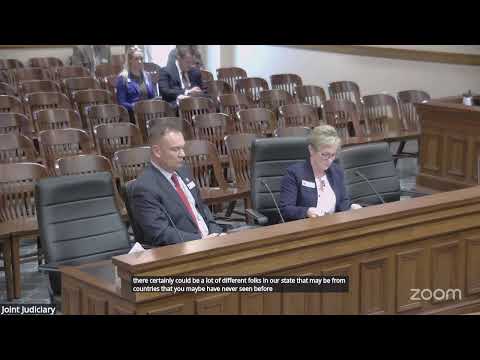
Dan Shannon, director of the Wyoming Department of Corrections, told the committee the department has seen repeated delays when the agency waits for criminal prosecutions before the Board of Parole can make an ineligibility determination. "We're asking to tighten the statute so that if you escape — and either are convicted in district court or are found by final administrative determination through DOC disciplinary hearings — you will be deemed ineligible for parole," Shannon said.
Board of Parole staff described current practice: a criminal conviction produces a non‑rebuttable ineligibility finding, but absent a conviction the board issues a rebuttable presumption of ineligibility and holds an evidentiary hearing. That process, the board said, can take months or longer; in some cases a sentence has discharged before the parole status could be adjudicated.
The committee also debated how to treat violent assaults occurring in custody. The parole board suggested replacing the statute’s undefined phrase "assault with a deadly weapon" with a reference to aggravated assault or, at minimum, the statutory standard for serious bodily injury. Members agreed to an amendment that will read in part that a prisoner is ineligible if they "made an assault with a deadly weapon or caused serious bodily injury" to an officer, employee or inmate.
Affected family members testified in public comment. Valerie Hoffmeister of Gillette described a case in which an offender absconded from community placement, was at large for weeks, and later had charges dropped; she urged the committee to prevent dangerous offenders from receiving placement or parole after absconding.
Representative Webb moved to make H.B. 170 a committee bill; the motion carried. The committee also asked LSO to draft statutory language incorporating the DOC and parole board recommendations and to examine whether additional restrictions on eligibility for community placement should be considered in a separate bill.
What happens next: LSO will prepare draft language for committee consideration; committee members signaled interest in a near‑term follow‑up to ensure the statutory language provides clarity and speed of administrative resolution without creating unintended punitive consequences.
Sources: Testimony from Dan Shannon (Wyoming DOC), Board of Parole staff, public comment from Valerie Hoffmeister.