Get Full Government Meeting Transcripts, Videos, & Alerts Forever!
Get email alerts on the Tax Foreclosure topic
No spam. Unsubscribe anytime.
Lewiston city attorney outlines changes to tax-foreclosure process; surplus proceeds must be returned to former owners
Summary
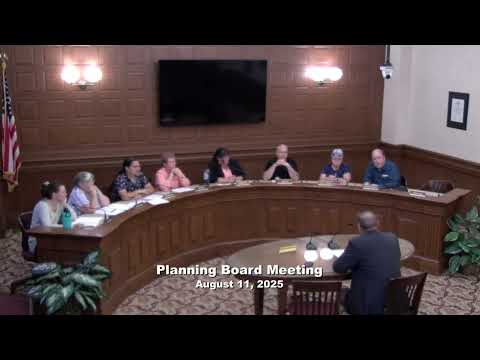
City Attorney Mike Kerry told the Lewiston Planning Board on Aug. 11 that a 2023 Supreme Court decision and state statute require municipalities to list tax-foreclosed properties on the open market and return any sale surplus to former owners; the board asked follow-up questions about liability and occupied properties.
City Attorney Mike Kerry told the Lewiston Planning Board on Aug. 11 that recent legal change has altered how municipalities handle tax-foreclosed properties, including a requirement that excess sale proceeds be returned to former owners.
Kerry said the tax-foreclosure process begins when a tax lien is assessed and, after a statutory period (discussed in the meeting as 18 months), the lien may be foreclosed by statute. "When the taxes aren't made ... there's a tax lean assessed and after a period of time, 18 months, that's required by statute, the tax lean is automatically foreclosed," Kerry said, explaining the basic sequence that leads to tax-acquired property entering the municipal process.
Kerry told the board a 2023 Supreme Court opinion changed prior practice that sometimes left municipalities with title and any surplus. "There was a Supreme Court case in 2023 that entirely changed that — any excess proceeds have to go back to the homeowner," he said, summarizing the effect of the decision on municipal practice.
Under the current process described to the board, the city must attempt to place tax-acquired property on the open market via licensed real-estate agents and list the property on the MLS like any other listing. Kerry said that selling at the "highest available price that the market will sell" helps the municipality avoid legal challenge; if the city fails to secure a valid market sale, the prior statutory fallback procedures can leave the municipality with ownership.
Board members asked why a municipality would sell for more than the unpaid taxes if it receives no direct benefit; Kerry cited the statutory requirement and potential legal exposure if a sale is not conducted at fair market value. He also described a notice process for lien holders and a seller accounting after sale to determine costs and surplus distribution.
Members raised the practical issue of occupied properties. Kerry said the statute treats tax-foreclosed property similarly to other real estate and noted timing and liability rules: municipalities generally have a 60-day period after a tax-acquired property becomes vacant to procure insurance and manage liability concerns. "At that point [liability] would attach to the municipality," he said, noting that municipalities often follow guidance (packet materials referenced from the Maine Municipal Association) when deciding insurance and handling occupancy.
Kerry and members discussed eviction dynamics when non-owners occupy a property and possible benefits to buyers if a property remains occupied; he emphasized municipalities should follow the statute and safe-harbor steps to limit legal exposure.
The board thanked Kerry for the explanation and materials and indicated the presentation addressed questions raised at prior meetings. No formal action was taken on policy; the presentation was informational and intended to guide future municipal procedures.
The planning board moved on to other business after the presentation.