Get Full Government Meeting Transcripts, Videos, & Alerts Forever!
Get email alerts on the Health Professions topic
No spam. Unsubscribe anytime.
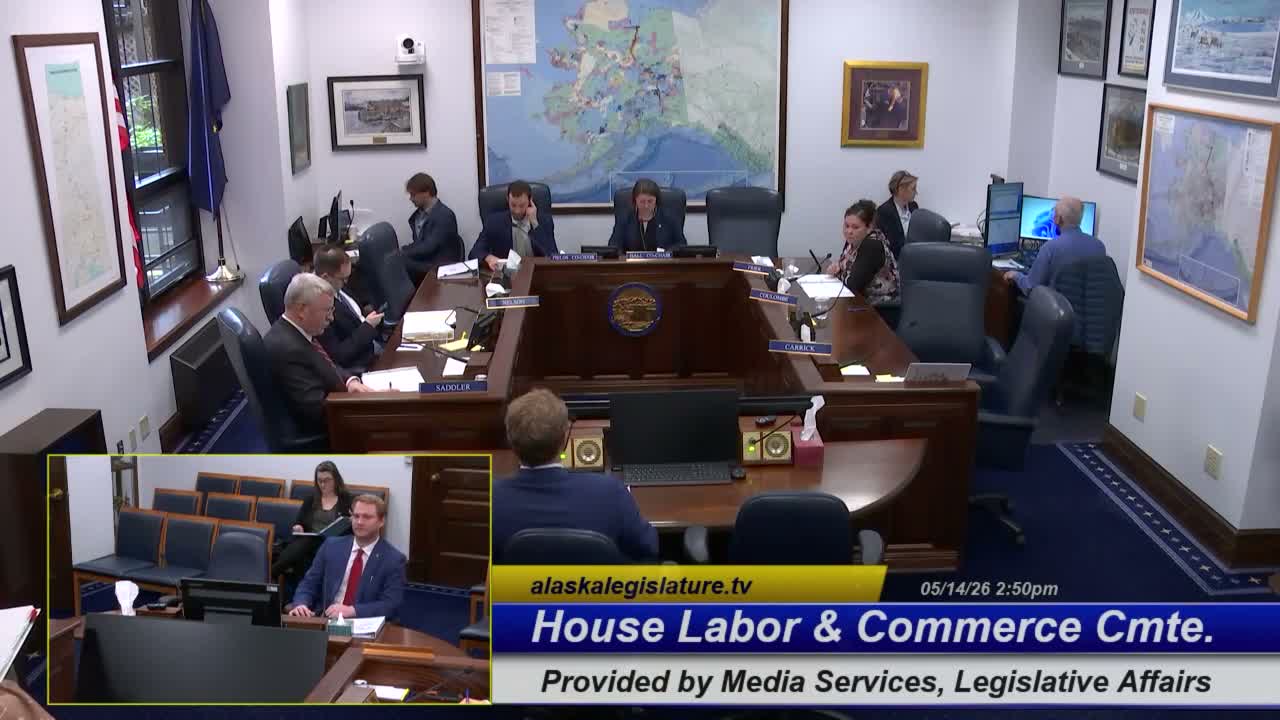
Committee considers HB197 to create dental board executive director and preserve hygiene education standard
Summary
HB197 would create an executive director post for the State Board of Dental Examiners, restore a two‑academic‑year CODA requirement for dental hygienists, and authorize fines for unauthorized practice; the Alaska Dental Hygienists Association urged language preserving the two‑academic‑year standard.
House Bill 197, presented by staff to Representative Tomaszewski, would establish an executive director for the Alaska Board of Dental Examiners, reinstate a two‑academic‑year CODA requirement for dental hygiene programs and give the board authority to levy fines up to $1,000 per day for unauthorized owners who do not transition ownership within a specified period.
Staff described three main bill components: (1) create an executive director position to streamline licensing workloads; (2) update dental hygienist licensure language to require graduation from a CODA‑accredited program of at least two academic years; and (3) provide enforcement authority to levy fines for unauthorized ownership of dental practices.
Sylvan Raab, director of the Division of Corporations, Business and Professional Licensing, said the board has roughly 3,670 license records and that an executive administrator would replace an existing licensing examiner position at a modest net cost. Shelley (Shalia) Trammell, president of the Alaska Dental Hygienists Association, urged inserting language that explicitly preserves CODA’s two‑academic‑year instructional minimum to protect educational standards and patient safety.
Committee members asked about costs and workload implications; witnesses said the executive director role would likely be funded through application fees and would relieve board administrative burden. Public testimony supported the hygiene education language.
No committee final vote on HB197 was recorded during this session; the bill remains before the committee for further consideration.