Get Full Government Meeting Transcripts, Videos, & Alerts Forever!
Get email alerts on the Agriculture topic
No spam. Unsubscribe anytime.
Committee debates hay-license terms, fertilization responsibility and bid approach
Summary
Members spent the bulk of the meeting revising a draft hay-license: they debated contract length (committee favored a five-year initial term), whether fertilization should be required and who pays for soil tests or fertilizer, and whether to issue an IFB or RFP; target bid dates of March 30–April 15 were discussed.
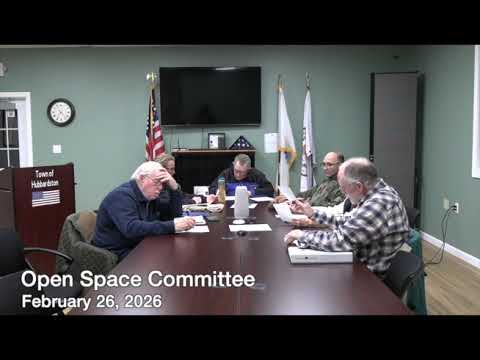
The Open Space Committee engaged in an extended discussion about the draft hay-license and how the town should structure procurement, pricing and fertilization requirements.
Committee members reviewed options for contract length and extensions, with multiple speakers supporting a five-year initial term and a capped set of option years rather than one-year renewals that could deter farmer bidders. Members emphasized that longer terms encourage contractors to invest in field improvements such as fertilization.
Fertilization was a core point of contention. Several members said the town should require fertilizing based on soil tests but debated who should pay for testing and fertilizer. The committee discussed two approaches: (1) require the contractor to include fertilization in their bid and list fertilization as a separate line item or unit price to manage volatile material costs, or (2) provide government-supplied fertilizer to reduce bidder risk and possibly attract more proposals.
Procurement mechanics drew attention: staff explained the difference between an IFB (invitation for bid), which emphasizes price and responsiveness, and an RFP (request for proposals), which allows subjective scoring. Members were advised that an IFB would limit evaluation flexibility but is a standard municipal procurement route; the previous cycle used an IFB and produced only one proposer. Committee members recommended checking procurement rules with the town administrator or council and deciding whether to pursue an IFB or an RFP before finalizing scoring language.
Members discussed the practicalities of soil testing and sampling frequency, with a volunteer offering to collect samples. A tentative timetable and procedural recommendation emerged: finalize contract language to require fertilization based on soil tests, ask bidders to provide separate line-item pricing for fertilizer or a unit price per ton, and target March 30–April 15 as bid-return windows so contractors can plan season schedules.
Next steps: committee members will refine the contract wording (including specific language about fertilization timing and rotation), consult with procurement staff about IFB vs RFP rules, and aim to circulate the packet to the town administrator for distribution.