Get Full Government Meeting Transcripts, Videos, & Alerts Forever!
Get email alerts on the Housing topic
No spam. Unsubscribe anytime.
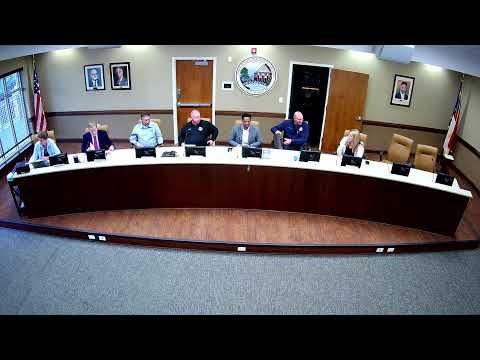
Fletcher council denies rezoning for proposed 115-unit affordable housing project at 196 Underwood Road
Summary
After a quasi-judicial evidentiary hearing with developer presentations and multiple resident witnesses raising stormwater and traffic concerns, Fletcher's council voted to deny rezoning of 196 Underwood Road from C2 to NBD, rendering the special-use permit application moot.
The Fletcher Town Council denied a rezoning request for 196 Underwood Road (the Berkshire Trace application), a proposed 115-unit Low-Income Housing Tax Credit (LIHTC) multifamily development, following a quasi-judicial evidentiary hearing and public testimony.
The applicant sought to rezone roughly 7.71 acres from C2 (Interstate Business) to NBD (Neighborhood Business District) so that a special use permit for multifamily housing could be considered. Planning staff explained the two requests are separate: if rezoning is denied, the special use permit application becomes moot. Staff noted the project would include five three-story residential buildings, approximately 140,740 square feet of floor area, a proposed density of 14.92 units per acre (below the NBD maximum of 16), roughly 247 parking spaces (18 ADA), and amenities including a playground and community room. Staff also noted the planning board reviewed the requests and recommended denial of both the rezoning and the special use permit (vote 5–1).
Applicant representatives said the developer, Taft Mills Group, proposes to deliver 115 LIHTC units aimed at households at 60% of area median income and below and explained tax-credit financing: "If we are awarded the tax credits, we then sell those tax credits to investors," said Nate (speaker 11), vice president of development for Taft Mills Group, describing how investor equity helps keep rents lower. The applicant said rents would be restricted by deed for 30 years and that the project would be served by municipal water and county sewer allocations already obtained.
Multiple residents and HOA representatives raised technical objections and neighborhood concerns during sworn testimony, focusing principally on stormwater and traffic. Stormy Ellis (speaker 13), an assistant district attorney and Fletcher resident, said runoff and elevation patterns have previously caused flooding near Lansford Circle and warned, "Where will it flow over? Right into our houses there." Wes Stroop (speaker 7), president of the Stafford Hills HOA and a licensed contractor who works in stormwater management, presented video evidence and argued no engineered stormwater system can fully replicate a natural wooded tract: "No engineered stormwater plan can replicate absorption of a natural woody tract."
Engineer John Kennard (speaker 10) testified the developer planned a combination of underground StormTech systems and a wet or bioretention pond to manage stormwater and committed to detaining the 10-year storm event (above the town’s 1-year requirement). Kennard described ingress/egress points, buffers of 20–100 feet along the eastern boundary, and utility allocations from MSD of Buncombe County and City of Asheville Water.
Attorney James Lloyd (speaker 16), representing Stafford Hills, read statutory guidance (North Carolina General Statutes §160D-605) on factors governing rezoning decisions and argued the town’s comprehensive plan aims to direct higher-density residential development to the town core; he urged council to follow the planning board’s recommendation. Council member (speaker 2) moved to deny the rezoning, reading a motion that cited inconsistency with the land use plan, the town’s intent to steer higher-density housing toward the core, and concerns the proposal would remove commercially zoned land along Underwood Road. The motion was seconded, and the council voted by voice to deny the rezoning. With the rezoning denied, the special use permit was not considered further.
Staff will prepare a written decision that reflects the vote and reasoning; the decision will be provided to the applicant and parties with 30 days to appeal. The applicant noted the rezoning approval would not have guaranteed final selection for tax-credit funding, which remains competitive.
The hearing record includes technical testimony on stormwater design, traffic review thresholds (NCDOT involvement and potential TIA), ADA-accessible parking, and the planning board’s prior 5–1 recommendation for denial. Council’s decision to deny was grounded in the record and framed around plan consistency and reasonableness criteria required under state statute.