Get Full Government Meeting Transcripts, Videos, & Alerts Forever!
Get email alerts on the Student Devices topic
No spam. Unsubscribe anytime.
Kansas board opens wide-ranging review of classroom device use amid concerns about distraction, equity and data privacy
Summary
At its May 12 meeting the Kansas State Board of Education opened a formal discussion of one-to-one student devices, with staff presenting emerging research and board members urging a slow, stakeholder-driven approach that protects young learners, supports teachers and addresses district IT and data-privacy gaps.
The Kansas State Board of Education on May 12 began a multi-stage review of how districts use one-to-one devices in classrooms, after staff presented emerging research and a proposed framework for guidance rather than an immediate policy change.
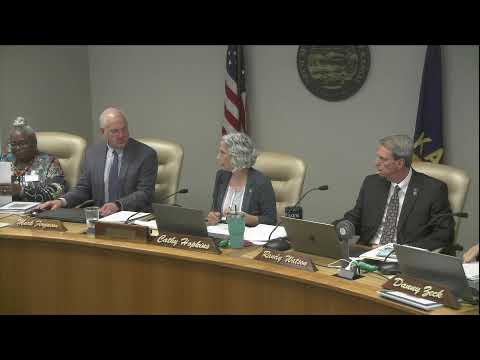
Board chair Kathy Hopkins called the item a ‘‘receive’’—a preliminary report intended to gather information and public input rather than a finished rule. Commissioner Randy Watson and board members Melanie Haas and Danny Zack, who led the work, said much of the evidence available is correlative and that the board should avoid rushing policy that could create unintended consequences for districts.
‘‘We’re asking Kansas to chime in,’’ Haas said, asking for public feedback and stressing the need to ‘‘move fast’’ on careful policy work while avoiding hasty mandates. Zack added bluntly, ‘‘I don’t care what Alabama, Tennessee, Utah, and Virginia are doing. What I care about is what’s going on right here in Kansas.’’
Presenters and members raised several recurring concerns: younger children’s handwriting and early literacy may be harmed by excessive screen time; teachers report new classroom-management challenges and loss of tactile instructional practices; districts lack uniform IT staffing and security standards; and parents want clarity about data collection and how student information is used and stored. Board members asked staff to identify technical requirements and reliable monitoring options and to consider equity impacts for districts that invested heavily in devices without new funding for alternatives.
KSDE staff emphasized practical constraints. The department said any statewide action must account for district contracts, curriculum dependencies and the cost of replacing digital platforms with printed materials. Staff also proposed improved reporting and a public survey so districts, teachers, parents and students can contribute perspectives before the board considers firm guidance.
Several board members urged gradualism. ‘‘The path forward here is to do no harm,’’ Haas said, asking the board to prioritize student safety and to coordinate widely with superintendents, teachers and families. Members floated possible next steps including a retreat, a special public meeting series, and a survey to gather district-level practices and parental input.
The board did not vote on policy at the meeting. Members directed staff to circulate the presenters’ slides and to prepare materials for further public engagement, with a follow-up discussion scheduled at a later meeting.