Get Full Government Meeting Transcripts, Videos, & Alerts Forever!
Get email alerts on the Music Program topic
No spam. Unsubscribe anytime.
Hollis‑Brookline board to staff next year’s high‑school music program with one teacher amid public outcry
Summary
Administrators told the Hollis‑Brookline Cooperative School Board that low elective requests and new graduation requirements mean the district will staff next year’s high‑school music program with a single full‑time music teacher; dozens of students, parents and alumni urged the board to reverse the decision and preserve a dedicated band director.
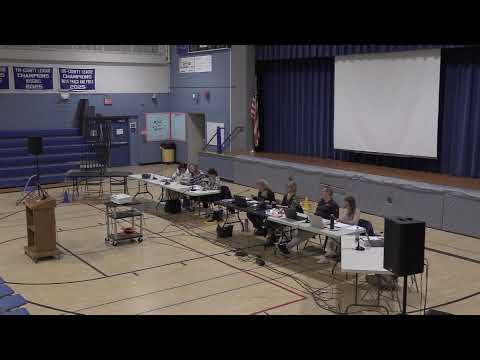
HOLLIS/BROOKLINE, N.H. — The Hollis‑Brookline Cooperative School Board on May 13 faced sustained public opposition after administrators said enrollment and staffing rules will leave the high‑school music program staffed by a single full‑time music teacher next year.
Chair Holly D’Arlo Babcock opened the meeting by promising the board would explain the sequence of enrollment forecasts, contract timelines and state credentialing rules that led administrators to recommend "right‑sizing" several positions. Superintendent Burkscog told the board that, given course‑request tallies and new state graduation requirements, the district must move to one full‑time music teacher for the coming year while keeping multiple band sections on the schedule. "So as we move forward to next year, we're moving forward with the one music teacher, meaning one teacher," the superintendent said.
That announcement drew more than an hour of public comment focused narrowly on the decision. Speakers included current students, alumni, parents, music educators and longtime residents who said a dedicated band director is not interchangeable with vocal or choral instruction and warned of long‑term damage to the program's continuity and recruitment pipeline. A resident who identified themselves as a district parent and band director told the board, "Music is an engine that builds them," and urged trustees to "preserve this position, shift the focus to rebuilding rather than dismantling." Student speakers also urged retention of the role; one high‑school student, Nash, said, "Band is more than a class. It is a place where students turn discipline, teamwork, and patience."
Administrators and the principal, Jake Hess, said falling elective requests — exacerbated by changes that increase required coursework and limit elective space for incoming ninth graders — left the district with numerous sections below the policy minimum. Hess detailed schedule tradeoffs and said roughly 25 course offerings across departments would not run next year because requests fell short of the district's class‑size thresholds. He also noted that some after‑school activities have historically been staffed by stipends and community volunteers and that the district will continue to seek community support for extracurriculars while budgeting two full‑time music teacher positions in the FY28 budget should enrollment rebound.
Trustees heard repeated appeals that the board delay or reconsider the staffing change, with multiple speakers warning that cutting dedicated instructional positions makes later rebuilding far more costly and difficult. Board members thanked speakers and asked administration for more specific follow‑up. Several trustees said they wanted additional scheduling and enrollment detail before making any irreversible personnel decisions.
Beyond the music discussion, the board approved routine items and several motions: the consent agenda was approved by roll call, proposed trips were approved (a student band trip to Nashville was approved 5–1; a senior whitewater rafting trip was approved unanimously), and the board approved a breakfast price increase from $1.75 to $2.00 for 2026–27. The policy committee presented a revision to the class‑size policy (IIB) — lowering certain minimums and tightening some maximums — which the board accepted for first reading and asked the policy committee to refine exceptions and implementation language.
What happens next: the board scheduled further discussion of class‑size policy adjustments and asked administrators to return with clarified numbers and options. Trustees said they would accept petitions and continued public input; any final staffing actions will follow the district’s personnel processes and applicable collective‑bargaining rules.
The board moved into non‑public session under RSA 91‑A:3 at 9:56 p.m.