Get Full Government Meeting Transcripts, Videos, & Alerts Forever!
Get email alerts on the Special Use Permit topic
No spam. Unsubscribe anytime.
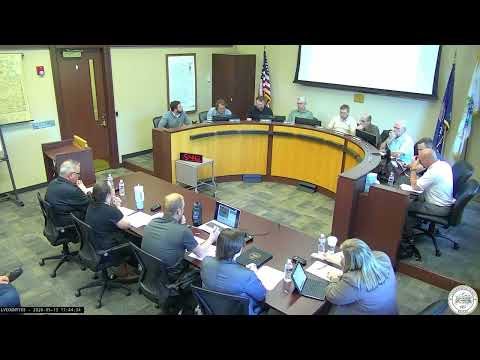
Leavenworth County planning panel again recommends denying Kaw Valley sand-extraction permit after extensive hearing
Summary
After a lengthy remand hearing and two hours of public comment, the Leavenworth County Planning Commission voted 5–3 to recommend denial of Kaw Valley’s special-use permit for a sand-excavation and stockpiling operation, citing unresolved safety, road and neighborhood-character concerns. The Board of County Commissioners will consider the recommendation June 3, 2026.
The Leavenworth County Planning Commission voted 5–3 to recommend denial of Kaw Valley’s special-use permit to excavate and stockpile sand at a 435‑acre site near Golden Road, after a remand hearing that drew supporters, dozens of residents and prolonged discussion about haul routes, noise, water and road impacts.
Planning staff opened the hearing by reminding commissioners that the Board of County Commissioners asked the planning commission to reconvene to consider new facts and any modifications to the application. The applicant said its proposal has not formally changed but that it would present new information and alternatives.
Kaw Valley’s representative told the commission the company would average “50 trips a day” for commercial hauling and said a recent federal grant — which the applicant estimated at roughly $8 million — would fund safety-focused design work on Golden Road but not the full pavement reconstruction. The applicant offered to underwrite pavement strengthening on Golden Road with what it described as approximately 5 inches of new asphalt and proposed a per‑ton royalty payment to the county; the company asked for a 25‑year special‑use permit, while staff had recommended a three‑year limit.
“We will write the check or we don’t write the check — our SUP goes away,” the applicant said, describing an understanding that the county would verify any third‑party engineer estimates and determine the final cost of required pavement work. GBA Transportation’s Aaron Fritz, who presented the grant highlights, said the grant would address shoulders and safety improvements but would not cover widening the paved travel lanes.
Dozens of residents said the project would harm neighborhood character, public safety and groundwater. A resident, Cindy Reeves, who gave her address on Golden Road, told the commission: “Every day, a truck, every 10 minutes going by my house… I have to listen to that.” Other speakers raised concerns about silica dust, shallow wells, noise and the enforceability of haul‑route and royalty promises.
Several commissioners pressed the applicant on operational details the commission must weigh under the county’s “golden factors” — whether the proposal matches area character, whether the use is detrimental to nearby property, and whether there is a public health, safety or welfare gain. Commissioners noted the site is zoned industrial historically but that residential development north of Golden Road has intensified since that zoning was established decades ago.
After public comment closed, a motion to recommend denial carried on a 5–3 roll call, with commissioners citing unresolved concerns about road impacts, character of the neighborhood and potential health and safety effects as the basis for the recommendation.
Next steps: the Board of County Commissioners is scheduled to consider the SUP no earlier than June 3, 2026. The planning commission record and recommendations will be forwarded to the board; any proposed development agreements, royalty details or pavement bid numbers remain subject to future negotiation and BOCC review.
Details summarized from the hearing record: the applicant stated average hauling of 50 trips per day (a traffic study conservatively modeled up to 120 trips), proposed funding an estimated $3 million pavement fix (applicant estimate), requested a 25‑year SUP (staff recommended three years), and offered a draft development agreement including a per‑ton royalty. Opponents repeatedly raised groundwater and silica dust risks, limits to county enforcement of development‑agreement terms, and the practicality of enforcing a single prescribed haul route by long‑term customers.
The planning commission’s action was a recommendation to the board, not a final permit decision.