Get Full Government Meeting Transcripts, Videos, & Alerts Forever!
Get email alerts on the Lead Service Removal topic
No spam. Unsubscribe anytime.
Board recommends mandatory lead service-line replacement with 50% city cost-share
Summary
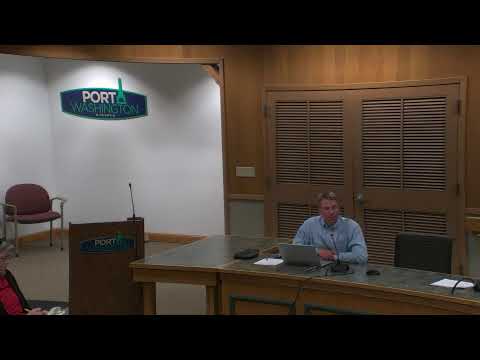
The Port Washington Board of Public Works recommended a city-managed, mandatory lead service-line replacement program that would cover up to 50% of private-side replacement costs and allow homeowners to special-assess remaining costs over 3–5 years; the recommendation will go to finance and common council. One member voted no.
The Board of Public Works on May 12 recommended that the city pursue a mandatory, city-managed private lead service-line replacement program with the utility covering up to 50% of replacement costs and homeowners able to special-assess the remainder.
The recommendation, which staff framed as the city’s response to the EPA’s updated Lead and Copper Rule, directs staff to present the option to the finance committee and common council for final approval. The motion passed on a voice vote with one member recorded in opposition.
Dan Fisher, the city’s wastewater and water superintendent, told the board the EPA rule (effective 2024) requires utilities to remove public-side lead lines from 2027–2037 and encourages municipalities to pursue private-side replacements. Fisher described the city’s inventory work (4,100 services total, hundreds of unknowns and several hundred known or suspected lead/galvanized services) and a web portal and hydro-excavation program to identify remaining public-side materials. “Nobody living in a home right now that has lead put that lead underground. It’s not their fault,” Fisher said, explaining why the utility would subsidize up to half of replacement costs.
The staff-recommended program (option 2) would pair mandatory participation with a 50% city cost-share on private-side replacements and allow homeowners to special-assess their share over a 3- or 5-year period; staff said a 3-year assessment is likely adequate if the city shares 50% of cost. Fisher noted prior pilot work in 2022 that replaced 33 private laterals using a $200,000 grant and reported an average net customer cost then of about $6,000 (staff are budgeting $7,500 per connection to reflect inflation). Over 10 years, staff estimated the program could require roughly $5 million in total private-side replacement work, split roughly 50/50 between residents and the utility.
During discussion, one member said they were “a little uncomfortable with requiring people to do it,” while others pressed staff on funding, timing, and whether the PSC limit on utility payments (50%) constrained options. The chair and staff said the board’s recommendation is advisory and that legal and finance committees will review assessment terms, rate impacts and program administration before any binding commitments.
The board’s motion to recommend staff’s option 2 was moved and seconded and carried; the board recorded one opposing vote. The recommendation will proceed to the finance committee and then to common council and counsel for final action.