Get Full Government Meeting Transcripts, Videos, & Alerts Forever!
Get email alerts on the Short Term Rentals topic
No spam. Unsubscribe anytime.
Staff proposes no‑fee short‑term rental registry and reactive enforcement in Wyoming
Summary
Staff recommended a one‑page, no‑fee annual registration for short‑term rentals to record local 24‑hour contacts and enable reactive enforcement; timeline includes ordinance amendments, outreach and a 3–6 month implementation window.
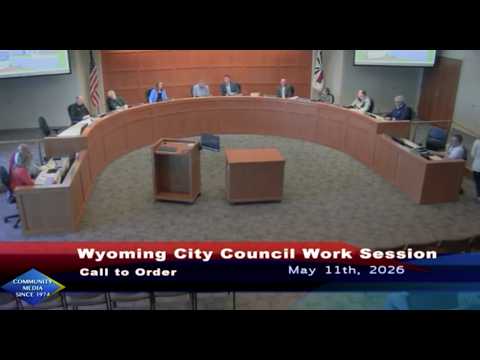
A city staff proposal to require a streamlined, no‑fee registration for short‑term rental properties was presented to the Wyoming City Council on May 11 as officials seek a middle path between property rights and neighborhood nuisance concerns.
Colton Heibel, assistant director of community and economic development, told the council staff recommends an annual one‑page registration, retained by inspections staff, that would collect 24‑hour local contact information but not require inspections or a registration fee. "This would be a separate registration that would be rather simple...It would have no fee and no inspections involved in it," Heibel said, describing the plan as a tool to support reactive enforcement when complaints arise.
Context: The proposal follows months of outreach. Staff said the city lacks a comprehensive registry for short‑term rentals, which makes proactive notices and targeted outreach difficult. Heibel said the proposed approach would let staff respond quickly when neighbors report problems — for example loud parties or parking violations — and that the ordinance would spell out a tiered enforcement regime (staff discussed the idea of a "three strikes" system leading to nonrenewal).
Public comment earlier in the meeting raised both housing and neighborhood concerns: Karen Francois told the council that houses used exclusively as short‑term rentals reduce the supply of housing for families and can bring noise, traffic and safety risks to residential streets.
Council members and staff discussed next steps and timing. Staff recommended preparing ordinance amendments and zoning changes for a first reading as early as June, followed by outreach and a 3–6 month window for implementation and additional reporting to council after a year of operation. Heibel stressed staff would start with education and a registry buildup because many property owners are not visible in city records.
Outcome: Council gave staff direction to draft the ordinance amendments and the attendant outreach plan; no vote to adopt rules occurred at the May 11 meeting.