Get Full Government Meeting Transcripts, Videos, & Alerts Forever!
Get email alerts on the Budget topic
No spam. Unsubscribe anytime.
Tomball ISD finance team outlines $264.4 million budget and a proposed $8 million deficit tied to opening two new campuses
Summary
CFO Zach Bowles told the Tomball ISD Board that estimated FY2627 expenditures total $264.4 million and that a proposed $8 million deficit stems largely from staffing costs to open Tomball West High School and a fifth-grade addition at Creekside Park; the board discussed trade-offs, uncertain state hold-harmless and special-education funding, and options to close the gap.
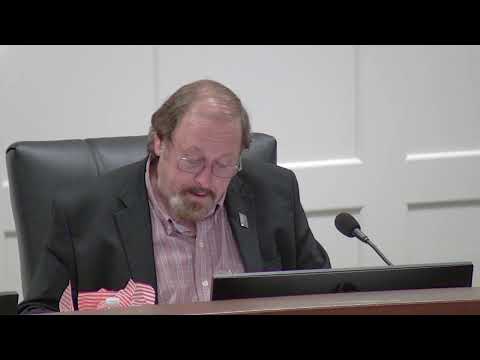
TOMBALL — Tomball ISD’s finance team presented a draft FY2627 expenditure plan totaling $264,400,000 on May 11, and said the district is considering a proposed $8,000,000 deficit driven largely by costs to staff two new campus openings.
“Our estimated expenditures for the 20 six–twenty 7 school year or fiscal year would be 264,400,000,” CFO Zach Bowles said, opening the board’s second budget workshop. He said the proposal includes a district-wide 2% general pay increase and a targeted $6.2 million investment for pay-scale competitiveness, plus enrollment-driven staffing for growth.
Bowles said the district projects revenues of about $256,400,000, leaving the $8 million shortfall that administration proposes to cover in part from committed and unassigned fund balances set aside in earlier bond cycles. He called particular attention to staffing needs, noting “the number of staff that you need to open Tomball West High School is a 100,” which he estimated would cost roughly $6.2 million.
The nut graf — why it matters: the gap reflects timing and formula changes at the state level and near-term operational costs for new facilities; closing it could require drawing on fund balance, delaying or reducing programs, or identifying new revenue, and the board pressed administration for specific trade-offs.
Board members pushed for options. “I need a little bit more as we go here to understand…where the other trade offs are,” one trustee said, asking what could be cut to produce a balanced budget without delaying campuses. Bowles and Superintendent Dr. Martha Salazar Zamora replied that the district has reviewed many scenarios, including hiring freezes, larger class sizes, and using attrition, but said most nonessential reductions would undermine programs the community expects.
Administration emphasized revenue uncertainty tied to state calculations. Bowles flagged two items that could materially alter the deficit: a hold-harmless payment connected to recent homestead exemption changes (estimated in the presentation at roughly $9.5 million for FY2627 under revised methodology, with a lower-end current estimate of $6.4 million for the current year) and new special-education funding formulas whose final dollar impact “will not be known until September 2027.” He told the board those amounts, when finalized and audited, could offset the $8 million shortfall.
On expenditures, Bowles said base budgets — payroll, benefits, stipends and pass-throughs — account for the majority of costs. He described payroll at approximately 88.5% of object-code expenditures and said the district aims to keep instruction-related functions at about 63–65% of total spending; the current plan shows instruction around 64.5%.
Board members and administrators discussed the mechanics of adopting and amending a budget. Bowles said the board will adopt expenditures by function and can amend the budget later if hold-harmless or special-education adjustments materialize; he suggested the district is prepared to pursue budget amendments once state data are audited and available.
What’s next: administration did not ask the board to adopt a tax rate at the May meeting; the tax-rate-setting process will follow state timelines later in the summer and fall. Bowles and trustees agreed staff will return with additional scenarios and with timing options to amend the budget when state figures are certified.
Reported speakers and attributions in this story are drawn from meeting remarks by Zach Bowles (CFO) and Dr. Martha Salazar Zamora (Superintendent) and board members as recorded in the public meeting transcript. The board did not vote on the budget at this workshop; it was presented for information and discussion.