Get Full Government Meeting Transcripts, Videos, & Alerts Forever!
Get email alerts on the Bh Connect topic
No spam. Unsubscribe anytime.
HCAI outlines BH Connect workforce initiative: up to $1.9 billion planned across five programs
Summary
HCAI presenters said CMS approved the BH Connect 1115 demonstration waiver in December 2024 and that HCAI and DHCS plan to invest up to $1.9 billion between 2025 and 2029 across five workforce programs, including the MBH student loan repayment program.
An HCAI presenter described BH Connect as California's major behavioral health transformation effort and said federal approval of the BH Connect 1115 demonstration waiver in December 2024 enabled the state to redesign and modernize its behavioral health system.
"In December 2024, California received federal approval from the Centers for Medicare and Medicaid or CMS for the BH Connect 11 15 demonstration waiver and related state plan amendments," the presenter said, noting the approval "unlocked the ability for a redesign and modernization of the behavioral health system in California, expanding access, improving quality, and supporting community based behavioral health services." The presenter (identified in the webinar as Angela) framed the waiver as the foundation for the BH Connect workforce initiative.
HCAI said the workforce initiative will support training, recruitment and retention across the continuum of care serving Medi‑Cal and uninsured members. The agency stated that between 2025 and 2029, in partnership with the Department of Healthcare Services, it will invest up to $1,900,000,000 across five workforce programs that together aim to expand the behavioral health workforce.
Those five programs—listed in the webinar—include the Medi‑Cal Behavioral Health Student Loan Repayment Program, a scholarship program, a community‑based provider training program, a residency/fellowship training program, and a recruitment and retention program (the latter scheduled to launch with an informational webinar in June). Presenters emphasized the initiative's focus on community‑based continuum‑of‑care expansion and improved outcomes for people experiencing homelessness and other vulnerable life periods.
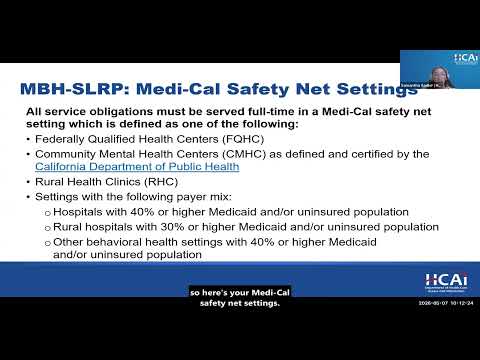
Speakers said the workforce investment will require recipients to commit to multi‑year service obligations in Medi‑Cal settings and that the state intends to ensure funds are expended through these programs; after demonstration year two the state may carry over unused funding and redistribute up to 30% across programs.
The presentation framed the workforce investments as integral to improving access and accountability in behavioral health services statewide, and presenters urged interested organizations and clinicians to consult the grant guide and HCAI resources for details.