Get Full Government Meeting Transcripts, Videos, & Alerts Forever!
Get email alerts on the Housing And Community Development topic
No spam. Unsubscribe anytime.
North Miami Planning Commission recommends FY 2026–27 CDBG and HOME Annual Action Plan, cites homelessness strain
Summary
The commission voted unanimously to recommend Resolution PC 17-122, the FY 2026–27 Annual Action Plan for CDBG and HOME funding, which allocates approximately $754,000 in CDBG and $280,000 in HOME funds and sets targets for housing rehabilitation, rental assistance and public services; members pressed staff on homelessness and limited rental-subsidy capacity.
The North Miami Planning Commission on May 13 voted to recommend Resolution PC 17-122, the city nnual action plan for the Community Development Block Grant (CDBG) and HOME Investment Partnerships (HOME) programs for fiscal year 2026 nd'027, after a staff presentation and brief discussion about homelessness and program limits.
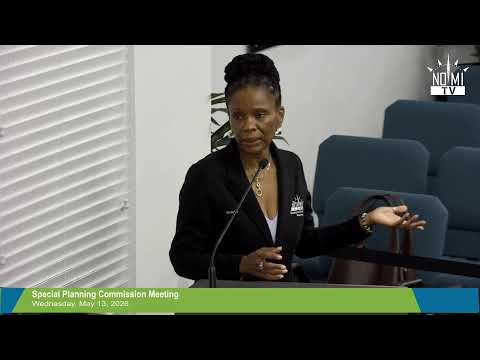
Albert Bazile, the city irector of housing and social services, told the commission the action plan carries forward priorities from the 2025 nd'029 consolidated plan and describes how the city intends to use federal CDBG and HOME funds during the coming year. "We are receiving $754,000 for the CDBG and $280,000 plus on the HOME," Bazile said, and explained that HUD rules and the consolidated-plan priorities determine how those funds may be allocated.
Bazile said the FY26 ction plan focuses the bulk of available funding on housing rehabilitation, with set-asides for elderly services, public facilities and economic development as allowed by program rules. He outlined the plan's proposed service targets for the year: rehabilitating 10 homes under CDBG (and two under HOME), assisting roughly 10 elderly homeowners, providing rental assistance to about 25 households, serving about 160 residents with public services, and producing facility improvements that would benefit roughly 200 residents.
The director also described program caps and administrative limits required by HUD. "There are requirements not to exceed 15%" for some public-service set-asides and administrative percentages, Bazile said, and noted HOME allocation rules such as a 10% administrative cap and a set-aside limit for CHDOs.
Commissioners questioned staff about whether the city could form its own housing authority and about how the plan addresses homelessness. Commissioner Each asked whether a North Miami housing authority had ever been formed; Bazile said the city had registered a North Miami Housing Authority on Sunbiz but the effort "never went anywhere," citing population and other factors as likely reasons the city did not receive approval to operate a standalone authority.
On homelessness, Commissioner Besson asked for more detail. Bazile said the city has not historically faced large numbers of street homelessness and is now adapting to a new reality. He said the city currently refers people to county and regional providers and can assist with move-in aid but has limited capacity to subsidize ongoing rent because prior HOME-ARP funding has been exhausted. Bazile described the work as "unknown territory" for city staff as they set up referral systems and partnerships.
Commissioner Pierre underscored the human consequences, recounting a recent case he had worked on involving a family living in a car where the husband was seriously ill: "They were living out of a car," he said, and noted the difficulty of finding sustained help when resources funnel through a limited set of programs.
Bazile told the commission the draft plan will be available for public review and comment from May 13 to June 18, the city council is scheduled to consider final approval on June 23, and staff aim to submit the plan to the U.S. Department of Housing and Urban Development by Aug. 1 (the HUD submission deadline is Aug. 15). He urged an earlier upload to avoid system problems that can cause late submissions to be rejected.
After discussion, the commission moved and seconded a recommendation supporting the plan; the five commissioners present approved the recommendation by unanimous voice vote. The item now proceeds to the city council for final action and a 30-day public comment period before submission to HUD.
The commission also confirmed meeting dates for June 2 and tentatively for July 16, agreed to take August off and to meet again Sept. 1.