Get Full Government Meeting Transcripts, Videos, & Alerts Forever!
Get email alerts on the Special Education topic
No spam. Unsubscribe anytime.
Special education director reports improved planning time, survey results and 2025–26 annual plan
Summary
A division special education leader told the board that a faculty survey (34 responses) showed improvements in protected planning time and collaborative teaching; the 2025–26 611/619 annual plan was presented and marked available for two weeks of public review.
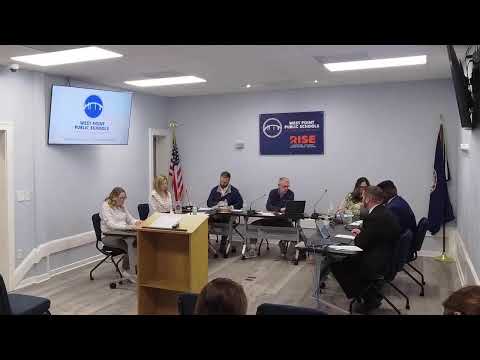
The division’s special education director briefed the board on 2024–25 progress and next steps for special education services, summarizing a faculty survey and presenting the 611/619 annual plan.
The director said the faculty survey included 18 questions and received 34 responses. Of those, eight questions showed 90% or greater agreement or somewhat agreement; seven questions ranged 81%–89% agreement; and three questions were under 80% agreement. The director highlighted gains in protected planning time (reported as 33% agree in 2023–24 to 82% agree this year) and increased collaborative instructional strategies across general and special education teachers.
Staff described training partnerships with TAC and William & Mary, in-person administrator training, and targeted coaching for preschool and K–12 teachers. The 611 (school-age) allotment will fund partial salaries for three special education teachers and a paraprofessional; 619 funds a portion of a speech/support specialist salary and instructional supplies for early childhood special education.
The director said the annual plan was available for public review for two weeks and that the division had met maintenance-of-effort requirements for the prior year. Board members asked about survey delivery and response rates; the director said the survey was emailed and left open an extra week and that 34 responses was the highest participation since 2021–22.
Next steps include continued partnerships with TAC, adjustments to case-load and workload practices, and a future presentation of the inclusion action plan during summer months.