Get Full Government Meeting Transcripts, Videos, & Alerts Forever!
Get email alerts on the Summer School topic
No spam. Unsubscribe anytime.
Summer school drew 334 students; coordinators seek more teachers and outreach to ease capacity limits
Summary
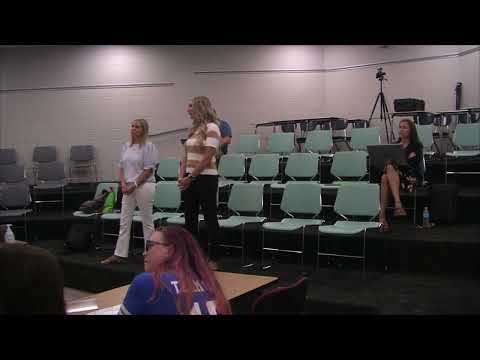
Courtney Harland, the district’s summer school coordinator and a first-grade teacher, told the board that 334 students enrolled in summer programming with strong K–6 attendance but lower middle-school participation; presenters cited limited teacher availability, pay disparities and transportation as the main constraints to expanding offerings.
Courtney Harland, identified in the transcript as a first-grade teacher and the summer school coordinator, told the board the program enrolled 334 students this year and achieved 93.4% attendance for K–6 and roughly 89.76% for middle-school participants. "We had 39 mentors," Harland said, describing high mentor engagement and daily support for enrichment classes ranging from cooking and art to a Taylor Swift–themed geography activity.
Board members pressed presenters about whether students were turned away once classes filled. Harland explained enrichment classes used an open-registration lottery and were capped: "Once they're full... the class closes on Infinite Campus," she said, and students invited for skill-based support were guaranteed a spot. The presentation also flagged transportation and registration access as participation barriers, with one board member noting weather and distance can limit middle-school attendance.
Presenters identified staffing and compensation as the principal limits to program expansion. Harland and a colleague said the district has increased booster pay in recent years but that the enrichment pay still trails teachers' hourly rates, which makes it harder to recruit more instructors. They outlined steps to increase equitable access, including targeted outreach through school social workers and improved registration processes for families without ready internet access.
The board expressed appreciation for the coordinators' organization and results and discussed modest operational steps: making registration more equitable, exploring broader advertising for enrichment teachers (including outside-district candidates), and continuing to monitor whether transportation supports can be arranged. No formal action was required; the presentation closed with trustees thanking the presenters for a detailed recap and suggestions to refine next year’s rollout.