Get Full Government Meeting Transcripts, Videos, & Alerts Forever!
Get email alerts on the Childcare Funding topic
No spam. Unsubscribe anytime.
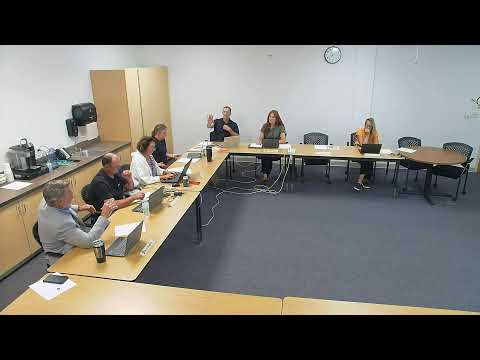
Somerset School District debates district-run daycare plan amid cost and competition concerns
Summary
Public commenters and board members questioned a superintendent proposal to open a district-run daycare, pressing for clearer startup-cost estimates, community survey reliability and the impact on local private providers before an October levy decision.
A public commenter urged the Somerset School District board to reject using taxpayer funds to operate a district-run daycare, arguing at Monday's meeting that the proposal would unfairly compete with private, taxpaying providers and that enrollment trends do not justify the new service.
"Government should not compete against taxpaying businesses," said Lou Jine, who gave her name and address during the public-comment period and questioned an estimated $129,000 annual deficit cited in the presentation.
The superintendent (referred to in discussion as Shannon) and staff presented slides comparing nearby districts' use of Fund 80 for child-care and community-education programs, summarized county-average rates (data pulled June 27) and outlined a model that, in the presentation's 'Cadillac' configuration, assumed 10 full-time staff with benefits. Leslie Thomas, introduced as the district's child-care expert, and Dave, the district finance staff member assisting with fiscal estimates, answered technical questions.
Board members and members of the public pressed several points: the reliability of an online survey that showed about 81 respondents would use the program, the planned capacity of roughly 86 spots, whether the district would enroll nonresident children, and whether a district-operated center would undercut four existing licensed local providers that reportedly have waiting lists.
"We have four licensed daycares in town and they all have waiting lists," a board member said during the discussion, noting both demand and competition concerns. Shannon responded that many districts take a multi-year approach: large up-front capital investments that may take two to four years to reach break-even, and that the district's proposals include options to set fees at higher or median levels to affect the time to self-sufficiency.
Finance staff noted that much of the start-up cost is driven by building upgrades required by licensing code—sprinklers and exterior doors for classrooms were cited as major capital items—and that a Fund 80 levy could be used as a one-time source for those up-front costs. The presentation included an illustrative calculation discussed in the meeting: at $40 per $100,000 of assessed value, a $300,000 home would see about a $120 annual levy as an example of the order of magnitude, not a final tax rate.
Board members requested additional materials before any funding decision: more detailed start-up cost estimates from districts that have implemented similar programs (including initial outlays and time to break-even), clearer survey data with demographic breakdowns, and a community outreach plan (districtwide mailer or broader survey) so that voters and taxpayers would have reliable information before the October levy timeline if the board were to pursue a Fund 80 ask.
The superintendent said the board could expect more data and that the item may return for a decision at the next meeting cycle or, if the board chooses, be placed on an October levy timeline. No formal motion to fund or to open the daycare was made at the meeting.
Next steps: staff will gather comparative cost and revenue data from other districts, refine the startup estimate and develop a community-information plan ahead of October deadlines for Fund 80 levy consideration.