Get Full Government Meeting Transcripts, Videos, & Alerts Forever!
Get email alerts on the School Budget topic
No spam. Unsubscribe anytime.
West Point Public Schools proposes $13.9 million FY26 budget, asks town for $295,000 net increase
Summary
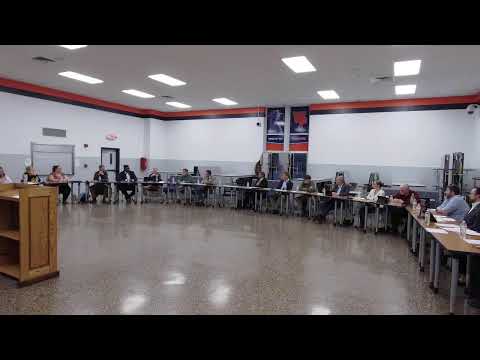
Dr Frasier presented West Point Public Schoolsproposed FY26 budget to the Town Council and School Board, requesting a net $295,000 increase that would raise the operating budget to about $13.9 million. Priorities include a 3% staff compensation adjustment, special-education staffing, psychological services and curriculum support.
Dr Frasier opened the joint public hearing with a presentation of the West Point Public Schools proposed FY26 budget, saying the district is proposing a $13.9 million operating budget — a 3.65% increase that translates to a net $295,000 ask after projected state revenue increases.
"Our mission is we engage all students in robust preparation for a life of continuous learning as productive citizens," Dr Frasier said, and framed the FY26 request around staffing, student supports and capital upkeep.
The presentation divided the division's finances into a Capital Improvement budget (which the presenter said receives $105,000 annually from the town) and an operational budget governed by the Code of Virginia covering instruction, operations and maintenance, administration, attendance and health services, transportation, food service and debt service. The district cited current and historic enrollment data and said it proposed an Average Daily Membership (ADM) projection of 790 for FY26; the presentation also repeated a per-student basic aid figure of $844.
Key budget priorities Dr Frasier listed were a 3% staff compensation adjustment (the presentation noted a prior 3% raise cost the division about $77,000), funding a middle/high special-education coordinator that has been off-budget, expanded psychological services, continued Career and Technical Education support ("Bridging Communities"), coverage for floater substitutes, and athletic program support. Those priorities were presented with a combined price tag shown in the slides as about $492,000; projected state revenue increases were shown at roughly $196,000, producing the net $295,000 requested increase.
The slides the presenter reviewed also broke down revenue and expenditures: roughly 57.7% of operating revenue from state sources, 36.3% local, 2.4% federal and 3.7% other (which includes tuition). On the expenditure side, instruction represented the largest share at about 83.5% of operating spending, with operations and maintenance, administration, transportation and school food making up the remainder.
Dr Frasier reviewed special-population counts and early-childhood programs, saying the district currently serves approximately 112 students with disabilities, 24 English-language learners and 47 gifted students, and that the Virginia Preschool Initiative enrollment was about 30 students. The presenter described an "iPod" reverse-inclusion preschool model for staff children and an early-childhood special-education program required for children age two and up.
During questions, a member of the audience asked whether limiting tuition slots had affected housing demand; the presenter said the district has tightened tuition acceptance rules, sometimes interviewing applicants and prioritizing in-town residents, and noted the current tuition rate listed in the slides was $3,200 per student.
A town official, asked to summarize federal relief funds, said the locality received CARES and ARPA allocations that funded several school and town projects. "We were fortunate to get about $3.4 million in ARPA funds," the official said, adding that roughly $1.4 million of the ARPA allocation went to schools and that remaining balances are nearly exhausted; the official estimated the school's ARPA balance at approximately $2,000. He listed uses including partial elementary-school roof work, cafeteria and library upgrades, playground updates and a major waterline replacement paid with relief funds.
That same town official said the town currently faces an approximate $1.2 million gap between projected revenues and expenditures across town departments and will meet individually with council members to consider spending reductions and revenue options before the council finalizes its budget.
The presenter closed by reminding the board that the upcoming adoption vote is scheduled for the board's March 18 meeting and that state budget changes from the governor could alter final revenue figures. The hearing then concluded and the meeting adjourned.