Get Full Government Meeting Transcripts, Videos, & Alerts Forever!
Get email alerts on the Rehabilitation And Culture topic
No spam. Unsubscribe anytime.
Cultural Works—project amplifies formerly incarcerated artists and integrates materials into teaching
Summary
Time Out of Joint, a Cultural Works project funded by an AFC Community Collections Grant, recorded oral histories and performances by formerly incarcerated people, developed interviewer training, and plans to reuse the collection for podcasts and classroom lesson plans.
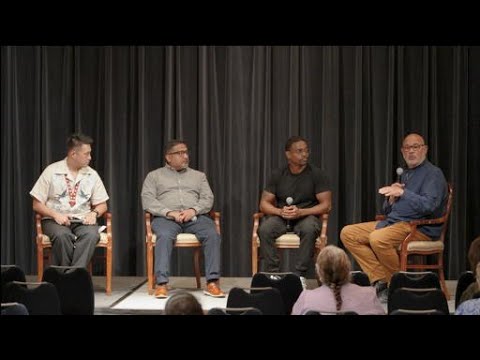
Steve Rowland, director of the Cultural Works project Time Out of Joint, told attendees that the project grew from a Shakespeare-in-prison class into a nationwide oral-history and arts documentation effort featuring formerly incarcerated people as teachers and cultural workers. Rowland said the project was supported by a Community Collections Grant (awarded in 2020) and produced interviews, performances and public events that the team archived at the Library of Congress.
Rowland described methods and partnerships: training interviewers through mentorship with Professor Charles Hardy, running public events with partners such as the Queens Public Library and the Langston Hughes Center, and using remote platforms (Zoom, Riverside) to collect testimony from participants across the U.S. and beyond. He emphasized a peer-to-peer approach that centers formerly incarcerated people as both narrators and educators.
Shamah ShaRize, identified in the pre-recorded segment as the project's artistic director, spoke about visibility and personal transformation: the archive provided formerly incarcerated people a way to be seen beyond case numbers and labels, and the project built opportunities for participants to speak in classrooms and public forums. ShaRize also described safety concerns that prevented in-person attendance and explained the emotional impact and healing aspects of recounting lived experience.
Participants read or performed material collected for the archive. David Hopper read a poem that framed writing as a tool of resilience; Kimberly Seabrook spoke about motherhood and personal growth; Steve Rowland recounted a phone interview with Tariq Elder Beaudouin, a Haitian-born participant Rowland described as deported after serving time and whose case Rowland said he believes was an instance of wrongful conviction.
Rowland said the team is translating recorded clips into podcast episodes and lesson plans with support from the Library of Congress—Teaching with Primary Sources and the Louis Houghton Initiative to reach students. He said the group now mostly employs formerly incarcerated people who are free as teachers for high school and college workshops rather than conducting programming inside prisons. Training focused on listening skills, mentoring and reflective interviewing; ShaRize described "cell therapy" practices and how structured listening improved interview quality.
In Q&A, presenters discussed emotional follow-up for interviewees and interviewers; Anthony LaFontant and ShaRize described ongoing peer networks, frequent Zoom meetings and mutual support as part of participants' recovery and professional development. Rowland said the collection—now archived—enables wider educational use and that the project aims to continue building lesson plans, podcasts and outreach events.