Get Full Government Meeting Transcripts, Videos, & Alerts Forever!
Get email alerts on the Cultural Preservation Music topic
No spam. Unsubscribe anytime.
Houston project preserves Chicano and Tejano music for the Library of Congress
Summary
Sonidos de Houston, awarded a 2022 American Folklife Center Community Collections Grant, collected interviews, recordings and community memories to document Houston—s Chicano/Tejano music scene and deposited materials with the Library of Congress for long-term access.
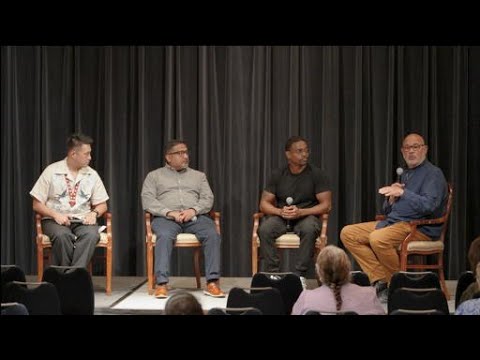
Isaac Rodriguez, a Houston-based documentarian, told a Library of Congress audience that Sonidos de Houston set out to record the city—s Chicano and Tejano music history after recognizing a lack of formal documentation. Rodriguez said the project, funded by a 2022 American Folklife Center Community Collections Grant, recorded musicians, club owners and family members and deposited the collection in the Library of Congress so others can find the material in perpetuity.
Rodriguez described the project—s scope and methods: oral-history interviews, outreach to families and in-person events that reunited artists who had not performed publicly in decades. He identified three central genres in the archive—conjunto (accordion and bajo sexto ensembles with European polka roots), Chicano soul ("brown-eyed soul") and Tejano—and played audio clips to demonstrate stylistic differences.
Rodriguez illustrated the archive with local history: he showed a photograph from the Pan American Ballroom, which he described as an epicenter for quincea—neras, weddings and community gatherings on Houston—s north side before it was demolished in the mid-1970s. He said the project recovered stories from artists who recorded only a single 45 or whose careers were cut short by military service or accidents; he recounted one band whose tour bus crashed, killing nine members, and another musician sent to Vietnam who never returned.
Rodriguez credited community participation for the project's reach, saying volunteers and family members opened doors to people who had not thought about their musical past for decades. He said the team organized what he called the largest Tejano jam session in Houston, bringing many horn players onstage, and that the collection now lives at the Library of Congress as a research resource. Rodriguez also noted the project—s broader educational aim: to ensure younger generations can access Houston—s Chicano and lowrider cultural histories.
In the audience Q&A, Rodriguez advised new archival projects to prioritize clear communication and carefully handled release forms. When asked whether the project had documented songs that were never recorded, Rodriguez said they found examples of unfinished recordings and stories about musicians whose careers were interrupted but did not describe a systematic count of unreleased songs.
The session closed with applause and thanks to the American Folklife Center and participating community members. The Sonidos de Houston collection is now archived at the Library of Congress for public research and educational use.