Get Full Government Meeting Transcripts, Videos, & Alerts Forever!
Get email alerts on the Agriculture Coffee topic
No spam. Unsubscribe anytime.
Russell G. Oliver documents specialty coffee farmers in Puerto Rico in AFC-supported film
Summary
Filmmaker Russell G. Oliver presented his 2022 AFC Community Collections Grant project documenting specialty coffee farming across southwestern Puerto Rico, highlighting heirloom varieties, processing methods, hurricane recovery and plans to exhibit the film and archive materials locally.
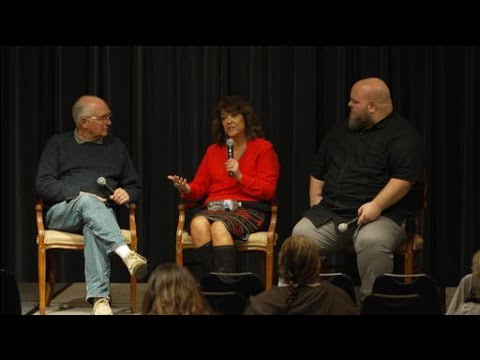
Russell G. Oliver, a photographer, filmmaker and environmental planner, presented his 2022 Community Collections Grant project documenting specialty coffee farmers in Puerto Rico, explaining the project’s scope, methods and community partnerships.
Oliver said the work grew from field visits beginning in 2017 and a 2022 grant that supported 28 interviews and roughly 2,000 photographs documenting farms, processing centers and roasters. He described coverage of southwestern municipalities — Yauco, Guayanilla, Maricao, Adjuntas, Lares, Utuado, Jayuya and Ciales — and additional visits to San Juan to record roasters and cuppings.
The project profiles multiple farmers and local processors. Oliver described Roberto Atienza as a third-generation farmer who modernized processing; Joseph Giuliani as a host who opened his home for fieldwork; and Remy Rodriguez and Gustavo Arroyo as younger producers focused on shade-grown practices and long-term land health. Oliver said interviewee Jose Morales described his connection to coffee, which Oliver paraphrased as, "I was born under a coffee tree." He also highlighted Gessellie, who has about 6,800 trees, noted she had been denied aid as a woman and was later named farmer of the year.
Oliver outlined production practices: seedlings grown in sand beds, transplanting into grow bags, contour planting to limit erosion, three years to maturity, hand-picking of ripe cherries and a largely non-mechanized harvest process. He said some smaller farms sell cherries to larger processing centers such as a wet-milling facility in Maricao owned by Luis Roig. Oliver described post-processing storage of green beans in cool, airtight conditions for six to 12 months before roasting.
The presentation also documented structural and climate-related challenges: Oliver cited a long-term shift in Puerto Rican coffee from export toward local consumption, attributing it to historical trade disruptions, blending with imported beans, labor shortages, market concentration and hurricane damage. He recounted access problems after Hurricane Fiona, including landslides and downed power lines that temporarily blocked farm roads.
Oliver said the film born from the project, El Motor: Coffee in the Heart of Puerto Rico, premiered as part of the AFC’s 2025 Homegrown Foodways series and the project has accumulated tens of thousands of YouTube views on the AFC channel. In response to a question about local stewardship of materials, Oliver said he and Remy are working with Pro Cafe, a nonprofit board on which Remy serves, to exhibit the film, photographs and interviews in Puerto Rico; he also noted the film was an official selection of the International Puerto Rican Film Festival in New York.
During audience questions, Oliver affirmed that traditional ecological knowledge and farming practices are passed down generationally and that technical exchange (workshops, travel to South America) helps raise quality scores. He explained harvest labor arrangements: farmers generally work with known seasonal and year-round pickers from nearby communities; some pickers prefer short morning shifts and supplement income with subsidies or other support.
Oliver closed by directing attendees to the film and the Library of Congress items linked to the project. The session included applause and a transition to the next presenter.
The Library of Congress presentation provides a publicly accessible audiovisual and photographic record intended to support cultural preservation and local exhibition plans.