Get Full Government Meeting Transcripts, Videos, & Alerts Forever!
Get email alerts on the Statutory Interpretation topic
No spam. Unsubscribe anytime.
Utah Supreme Court weighs whether ‘award’ in dram-shop law covers settlements
Summary
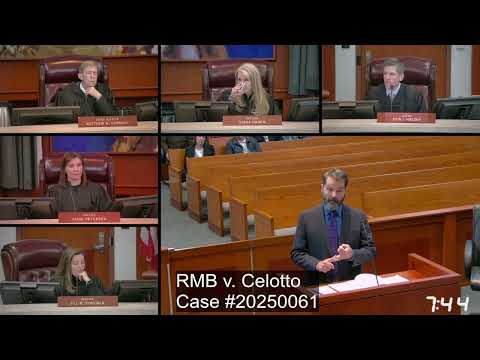
At oral argument in RMBB v. Salado, lawyers and justices debated whether the word “award” in Utah’s dram-shop statute includes settlement payments — a decision that would determine when a defendant may seek contribution from other parties and could affect settlement incentives in dram-shop cases.
The Utah Supreme Court heard argument over whether the word “award” in the state’s dram-shop statute includes amounts paid in settlement, a threshold question that determines whether a defendant who pays an injured plaintiff can later seek contribution from other potentially liable parties.
Petitioner counsel Trent Watups told the court the dispute turns on a single word and urged the justices to look to statutory structure and common-law contribution rather than to treat a dictionary definition as dispositive. “I don’t like that. I don’t believe that’s true,” Watups said of the court of appeals’ emphasis on dictionary definitions, arguing the statute’s phrase should be read with the modifier “under the act” and interpreted to allow contribution when a party “pays more than their fair share” even if that payment resulted from settlement.
Watups argued the legislature’s selection of the words at issue — and its decision to revive a cause of action for contribution — indicates an intent to allow courts to apply the common-law mechanics of contribution. He warned that parsing the sentence to exclude settlement payments would “swallow the intent of the legislature” and leave most customary settlements without a contribution remedy, a practical result he said would be unlikely to reflect legislative intent.
Opposing counsel John Barnes and several justices focused on the ordinary usage of “award” in litigation contexts. Throughout questioning, the bench asked whether the legislature intended “award” to mean a judicial or arbitral determination — a definition that would exclude most negotiated settlements. One bench member framed the practical concern sharply: “If defendants can no longer achieve finality through settlement, we’re going to see fewer settlements,” a point raised to highlight how including settlements within “award” could alter settlement incentives and litigation dynamics.
Much of the argument hinged on competing interpretive moves. Petitioner counsel urged the court to read the statute’s structure (including cross-references to section 1B) and the word “contribution” to resurrect common-law contribution principles. The bench and respondent counsel pressed whether the statute’s text and ordinary legal usage reasonably point to a narrower reading that protects settlement finality and applies contribution only where a binding adjudicative award (jury verdict, bench decision, or arbitration) has been entered.
The attorneys discussed comparative practice, noting that most dram-shop cases historically settle rather than proceed to trial; one bench member used a working estimate that only about 10% might reach final adjudication. Counsel also cited prior Utah decisions — including a reference to State v. Ronaldo Canton (2013 Utah 44) — and statutory guidance that words be construed according to context and approved usage.
No formal decision was announced. The parties finished oral argument after the court asked about briefing and materials included in the petition for writ; the justices said they would take the matter under advisement.
Why it matters: The court’s interpretation will determine whether settlement payments can trigger a defendant’s right to contribution from other entities (for example, other licensed establishments), which in turn affects the ability to allocate liability and the incentives for defendants and plaintiffs to settle. A holding that limits “award” to adjudicative outcomes would preserve settlement finality but narrow contribution remedies; a contrary ruling would expand contribution exposure for settling defendants.
Next steps: The Utah Supreme Court will issue a written opinion after deliberation; the transcript indicates no further hearings were scheduled at the close of argument.