Get Full Government Meeting Transcripts, Videos, & Alerts Forever!
Get email alerts on the Land Use topic
No spam. Unsubscribe anytime.
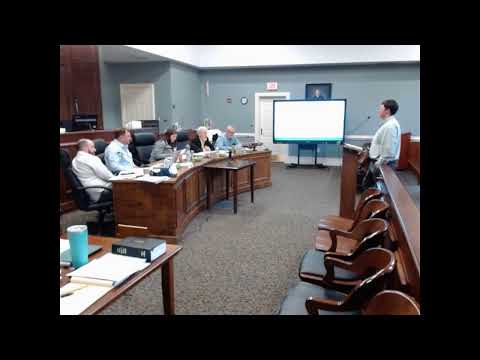
Nelson County supervisors approve Monroe Institute conference-center permit with conditions after hours of debate
Summary
After extended debate about water supply, traffic, emergency access and rural character, the Nelson County Board of Supervisors approved a special-use permit for an expanded Monroe Institute conference center with ten conditions, including road improvements, water and screening requirements and limits on events and tax-exempt status.
The Nelson County Board of Supervisors voted to approve a special-use permit for the Monroe Institute's proposed conference center after an extended public hearing and multiple amendments to the conditions attached to the approval.
Planning staff presented the application and emphasized that the comprehensive plan must be read as a whole when evaluating special-use requests; staff also noted draft zoning and subdivision ordinances are nearing adoption and that site-plan review would refine engineering issues. The motion to approve (read aloud by a board member) included ten conditions: widening and repaving the access road (Roberts Mountain Road) prior to occupancy, dark-sky-compliant lighting, sight-distance improvements meeting VDOT stopping-sight-distance standards, screening for any necessary fire-suppression storage tank, rainwater-capture features, confinement of new conference-center structures to Tax Parcel 34122 (while allowing trails and other nonstructural uses on listed adjacent parcels), a ban on weddings/festivals and outdoor amplified music associated with the SUP, retention of an existing tree line plus a berm and evergreen plantings between parking and the property line, ineligibility for local property-tax exemptions tied to charitable or religious use, and a site-plan requirement for a walking-path plan to deter pedestrian access to roadways and neighboring properties.
Opponents told the board the project would overwhelm local water supplies, damage ecological values and rural character, and strain local roads and emergency services. "Adding the load of a proposed project 'will more than double the amount of water usage in this small community," one supervisor summarizing public comment said, adding that the hydrology report did not account for increased usage. The same supervisor described the proposed building as "a 59,000-square-foot conference center" and warned the scale would be incompatible with A-1 agricultural zoning.
Supporters and others on the board countered that the Monroe Institute has long operated in the area and that carefully worded conditions could mitigate many of the concerns. Planning staff and several supervisors noted that final engineering (including water and wastewater system design) and any state health or DEQ approvals would be required during site-plan review before occupancy was allowed.
Wintergreen-area emergency services raised concerns about fire response times and staffing for a structure of the proposed size. "NFPA would require '[large] water storage for 60,000 square feet," Wintergreen emergency-services representative Curtis Sheets told the board, and he warned local volunteer turnout times and apparatus availability could make fire suppression challenging at that location.
The motion to approve the SUP (motion text read on the record) was followed by a roll-call vote as recorded in the minutes. Named roll-call prompts appear in the transcript (for example, "Mister Reed?" and "Mister Farnham?") with a mix of recorded yes and no answers; the chair then moved on to the next agenda item after the vote was concluded.
The board's action authorizes the Monroe Institute expansion subject to the conditions read into the record; site-plan approvals, permitting and any state-level reviews remain prerequisites to construction or occupancy. The file and conditions were recorded as Special Use Permit request number 250260 (referenced in the motion) in the meeting record.
What's next: the applicant must comply with the listed conditions and complete site-plan review and any required state health or DEQ approvals before construction or occupancy can proceed. The board record shows opponents have signaled potential legal claims tied to road-use agreements for the common Newland access if changes are required.