Get Full Government Meeting Transcripts, Videos, & Alerts Forever!
Get email alerts on the Prop S Survey topic
No spam. Unsubscribe anytime.
Survey of Prop S 'no' voters shows tax resistance and trust gap, consultants tell Rockwood board
Summary
A post‑election telephone survey of 300 patrons who reported voting 'no' on Prop S found top reasons were opposition to additional taxes, economic concerns, and distrust about district spending; the consultant recommended more targeted messaging, consideration of splitting ballot questions, and longer informational campaigns to rebuild support.
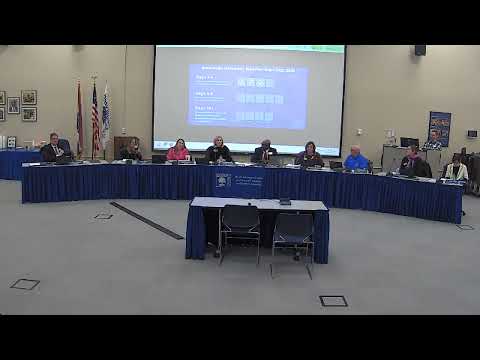
A consultant presenting post-election survey results told the Rockwood Board of Education that voters who rejected Prop S cited taxes, the economy and lack of trust in spending as the main reasons for voting "no." Rick Nobles, who conducted the random-digit-dial survey of 300 patrons (margin of error ±5.6 percentage points), said 146 respondents in the sample said they had voted "no," and that their most common reasons were not wanting additional taxes, concern about the economy, and not having children in the district.
Nobles said respondents identified lack of trust in the district’s stewardship of funds as a leading reason Prop S failed and that the most common recommendation from those voters was to provide explicit, detailed information about how money would be spent. He reported mixed responses on compensation and benefits: roughly 31% of respondents said teacher and staff pay was satisfactory, while 76% said raising compensation was important to attract and retain teachers. When asked whether salary concerns influenced their vote, 55% said it did not and 45% said it had an extraordinary influence among that subsample.
The consultant recommended several approaches for future campaigns: consider breaking future proposals into separate questions (so voters can approve some components without approving all), run a lengthier informational effort apart from pre-election activity, and pursue grassroots outreach to increase turnout among likely supporters. Board members discussed practical next steps including staff and community voter-engagement strategies (encouraging staff to vote, outreach to seniors, volunteer-led local contact), and emphasized the need to rebuild trust through sustained transparency rather than quick re-balloting.
Provenance: Presentation by Rick Nobles and Q&A with board members (SEG 660–SEG 875 and SEG 876–SEG 1142).