Get Full Government Meeting Transcripts, Videos, & Alerts Forever!
Get email alerts on the Judicial Oral Argument topic
No spam. Unsubscribe anytime.
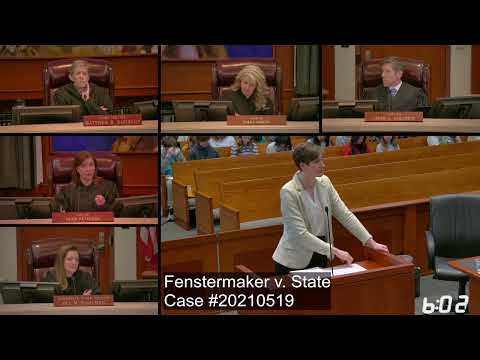
Utah Supreme Court hears argument over whether felony possession can bar self‑defense
Summary
At oral argument, appellate counsel urged the Utah Supreme Court to find that a 2017 statute barring self‑defense by a person committing a felony produced absurd results and to remand for a new trial under the 2018 amended language adding a causal nexus; the state defended the district court’s summary‑judgment dismissal and emphasized factual findings undermining prejudice.
The Utah Supreme Court heard oral argument over a postconviction challenge to a murder conviction, as appellate counsel argued that a 2017 statute barring self‑defense when a person is committing a felony was applied absurdly in the defendant’s case and should yield relief.
Appellate counsel Emily Adams told the court that the defendant (referred to in the record as Fencermaker) shot the victim, Randy, after Randy allegedly threatened to kill him three times; Adams said the jury convicted after being given incorrect self‑defense instructions and that, under Strickland and this court’s Grunwald guidance, the erroneous instruction could have led jurors to convict on facts that a correct instruction would not have supported. Adams argued two alternative constructions: that “a felony” should be read to mean a forcible or violent felony, or that the statute should require a causal nexus between the felony and the use of force. "It doesn't make sense if you're walking around with marijuana in your pocket that suddenly if somebody out of the blue comes and tries to stab you that you can't defend yourself," Adams said, urging the court that the causal‑nexus remedy or remand to apply the 2018 amended language would be the cleanest way to give both parties a fair opportunity to litigate the connection.
Adams cited trial exhibits and testimony showing marijuana use or possession roughly three hours before the shooting and emphasized there was "absolutely no evidence" in the record that marijuana affected the parties at the time of the shooting. She argued the legislature’s 2018 amendment — which added language limiting the bar to circumstances where the use of force is not a reasonable response to factors unrelated to committing the felony — demonstrates the original statute produced irrational results in some applications and that counsel should have pressed the causal‑nexus argument on appeal.
State counsel Daniel Day responded that the appeal is a postconviction challenge to appellate effectiveness and that the district court’s factual findings and summary‑judgment ruling should be sustained. Day told the court the evidence the state presented left the jury free to disbelieve the defendant’s version of events and argued that, even under an alternative instruction, the counterfactual prejudice showing required by Strickland is not met here. He pointed to the district court’s findings — including testimony that Randy was seated and unarmed when the gun was drawn, the victim’s intoxication, the defendant’s inconsistent post‑shooting conduct, and the jury’s split verdict (acquittal on aggravated assault) — as reasons a new instruction would not likely have produced a different conviction outcome.
Justices pressed both sides on core doctrinal questions. They asked whether the defense relied on the facial or as‑applied strain of the absurdity doctrine; whether a court that finds an unambiguous statute absurd should "reform" statutory language or simply decline to apply it in the particular case; and whether prejudice for Strickland purposes should be judged in light of a jury’s credibility determinations or on a counterfactual that treats the jury instructions as the only changed fact. One justice noted that remanding to apply the 2018 wording would permit both sides to make their arguments about proximate causation or foreseeability.
Counsel for the defendant acknowledged that hypotheticals exist (for example, a person severely impaired by intoxicants) where the forcible‑felony approach would not solve every problem; she reiterated that, on the facts here, the causal‑nexus argument is stronger. The state reiterated that possession combined with use of the firearm here creates the link the statute contemplates and that the district court’s factual findings make a showing of prejudice unlikely.
The court thanked counsel for their written and oral submissions and took the matter under advisement. No decision was announced at the conclusion of argument.
Background and next steps: The argument concerns how a statute limiting claims of self‑defense should be read when the defendant was a "restricted person" because of earlier drug possession, whether that restriction must be tied closely in time or motive to the use of force, and what remedy applies when the statute’s plain language leads to arguably irrational outcomes. The justices asked detailed questions about doctrine and remedy and appeared receptive to briefing on the interaction between Strickland prejudice analysis and Grunwald‑style review, but reserved decision.