Get Full Government Meeting Transcripts, Videos, & Alerts Forever!
Get email alerts on the Banking Policy topic
No spam. Unsubscribe anytime.
Sen. Tim Scott: stablecoin bill gaining bipartisan support; CFPB oversight, overdraft and 'reputational risk' on committee agenda
Summary
Sen. Tim Scott told bankers the Senate—anking Committee—xpects to move the Genius Act (stablecoin legislation) quickly with bipartisan support and outlined other priorities including CFPB oversight, overdraft policy, Section 1071 concerns and the FIRM Act. He urged bankers to engage with lawmakers.
Sen. Tim Scott, chairman of the Senate Committee on Banking, Housing, and Urban Affairs, told an audience of bankers that the committee—xpects to move the Genius Act, a Senate stablecoin bill, to the Senate floor with bipartisan support and said he hopes it becomes law before the summer.
The chairman said the committee picked up five Democrats during committee markup and that pre-floor, bicameral negotiations with House lawmakers are intended to narrow differences. "When you have those meetings before it hits the floor ... it allows for speed and momentum to work for us, not against us," Scott said, adding that he expects floor action "before the end of May." He described a bicameral working group including House members and Senate subcommittee chairs to define common ground.
Scott also described several regulatory priorities he intends to press as chairman. On the Consumer Financial Protection Bureau (CFPB), he said oversight should move the agency into "the normal congressional process" and favored downscaling its size and funding mechanisms. He called the confirmation of a permanent CFPB director "imminent," and predicted Senate action in the coming weeks.
On consumer fees, Scott defended scrutiny of proposals to cap overdraft charges, arguing that "I look at the overdraft fee as a way of paying for free checking." He warned against policy fixes that, in his view, could reduce access to basic banking services for low-income consumers and cited research he said shows capping fees can have unintended consequences for financial inclusion.
Scott also addressed concerns about Section 1071 reporting and other burden-driven regulatory proposals. Industry questions about 1071 nd its effect on small-business lending prompted Scott to say regulators and White House officials have acknowledged duplicative burdens and that the committee should look to remove unnecessary requirements.
On the FIRM Act, which Scott described as targeting so-called "reputational risk" pressure that can push banks to drop customers or industries, the chairman said the legislation and recent supervisory actions aim to protect lawful businesses from de-banking driven by reputational concerns.
Throughout the session Scott encouraged bank engagement with lawmakers. "When the American people come in in numbers, we pay attention," he said, urging bankers to bring stories, follow up repeatedly and make concrete asks to influence legislative outcomes.
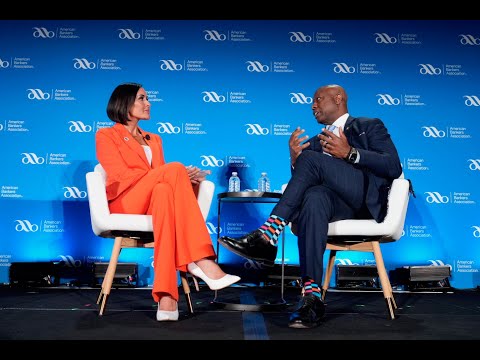
Fred Green, president and CEO of the South Carolina Bankers Association, introduced Scott and praised his banking experience. Kirstston Sutton, identified by the event as ABA executive vice president for congressional relations and legislative affairs, moderated the conversation and framed several questions about specific bills and nominations.
The exchange closed with the chairman reiterating his agenda and thanking the audience; he asked bankers to remain engaged as the committee advances the listed priorities.