Get Full Government Meeting Transcripts, Videos, & Alerts Forever!
Get email alerts on the Transportation Parking topic
No spam. Unsubscribe anytime.
Santa Cruz council directs staff to pursue parking, mobility and plan‑line work for transit‑proximate development
Summary
Facing state rules that reduce on‑site parking for new transit‑proximate developments, council authorized work on plan lines, objective standards, development‑impact fee updates and instructed staff to explore excluding certain new multifamily projects from neighborhood parking districts.
The Santa Cruz City Council on May 12 accepted staff recommendations and gave additional direction to address neighborhood impacts from transit‑proximate development and recent state parking statutes. The action included advertising an RFP for plan‑line work, drafting objective standards, and returning in the fall with code updates.
Transportation staff described a package of tools: plan lines and intersection design for areas expecting dense development, objective standards to require pedestrian and bicycle improvements, a retooled multimodal development‑impact fee to fund neighborhood projects, and changes to the residential parking permit program to make it predictable and financially sustainable. Staff proposed switching from per‑address to per‑parcel permits, seeking full cost recovery for permit administration, and using real‑time occupancy data to set permit supply.
Councilmember Newsom moved the staff recommendations and added direction that staff explore policy to exclude new multifamily developments (particularly those fronting major arterials or otherwise benefitting from reduced parking under state law) from eligibility for residential parking districts. Council member Golder seconded. The motion passed unanimously.
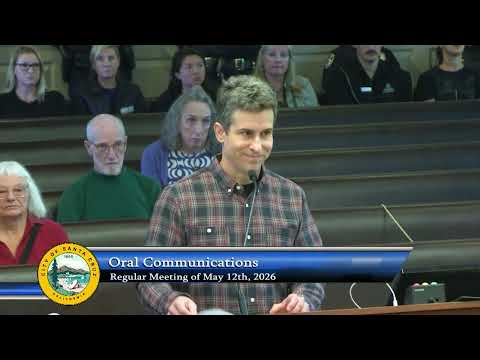
Residents from small, densely impacted neighborhoods described anxiety about spillover parking and urged strong protections. A Central Park neighborhood speaker said, "We are three tiny little blocks...I am terrified every day of what's gonna happen to my neighborhood" if nearby large developments can obtain resident permits in their neighborhood.
Staff and the community‑development director also discussed implementation details and tradeoffs. Lee Butler, community development director, summarized recent housing permitting: "In the last 2½ years we've issued building permits for 1,027 units; 893 of those units have been affordable," framing the volume of housing production behind the change in neighborhood dynamics.
Next steps: staff will advertise the plan‑line RFP now, draft code amendments this summer for return in fall/winter, and include policy options and trade‑offs for council consideration about permit eligibility, cost recovery and enforcement.