Get Full Government Meeting Transcripts, Videos, & Alerts Forever!
Get email alerts on the Housing Funding topic
No spam. Unsubscribe anytime.
Realtors, county and commissioners debate vacancy tax and other ideas for housing funds
Summary
San Miguel County commissioners convened a wide discussion with the Telluride Association of Realtors and stakeholders about housing revenue: county staff outlined $5.0M in housing funds and $600,000/yr from a half‑mill; proponents and opponents screened the failed state vacancy‑tax bill (HB 26‑1036) and agreed to form a local working group to develop funding options.
Commissioners and local industry representatives spent more than an hour weighing ways to raise money for workforce housing and to make existing funds go farther. County finance staff said the housing fund balance is approximately $5,000,000 (some of it restricted) and that an earlier voter reallocation of 0.5 mills produces about $600,000 a year for housing. The countyalso still collects employee‑housing mitigation fees; 2025 was a high year at about $1.8 million, but staff cautioned that was atypical and revenue is likely to fall back toward a $350,000–$400,000 annual range.
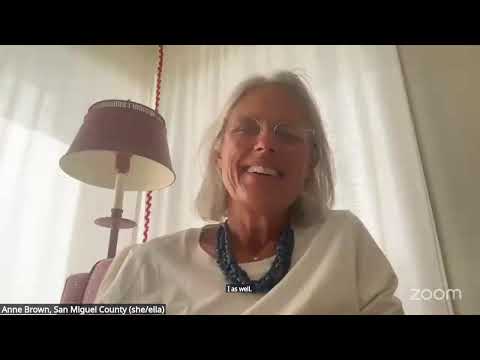
Commissioner Brown framed the policy discussion in state‑level context. “House Bill 26 dash 10 36, local taxes on vacant residential property,” she said, summarizing the version that reached this yearand noting it was permissive and would require voter approval at the local level. Brown said the bill would have allowed jurisdictions to set rates, vacancy definitions and exemptions locally, but that it had again failed in the legislature after opposition from groups including parts of the real estate industry.
Representatives of the Telluride Association of Realtors said the vacancy‑tax proposal as written raised practical and political concerns. A TAR speaker said the bill "felt like it's a punishment" for second homeowners, warning that poorly scoped taxes or layered levies could push owners and buyers away and shrink the local tax base. TAR suggested instead that the county and towns deepen partnerships with existing philanthropic vehicles and broker networks to encourage voluntary donations or an opt‑in investment vehicle for housing.
County staff and meeting participants discussed several practical short‑term and longer‑term options: more aggressive enforcement and verification of old deed‑restricted ADU units (staff estimate roughly 40 deed‑restricted ADUs remain in county records); a targeted program to offer deed‑restriction buyouts in limited cases; creation or strengthening of a public‑private housing fund that would encourage multi‑year commitments from part‑time residents; and a commissioners‑led stakeholder task force to vet tax or revenue options before a ballot measure would be proposed.
Finance director Jared gave cost examples for county projects, including a Deep Creek workforce housing scenario he described as a rough $28 million project that would require a stable debt service stream (he estimated roughly $2 million/year in long‑term support). He and other county staff emphasized that existing county fund balances are insufficient to address a regional housing shortfall estimated by the commissioners at nearly 1,100 units over time.
By the end of the discussion commissioners and TAR agreed on two near‑term steps: (1) convene a stakeholder group (county staff, commissioners, town representatives, philanthropic partners and realtor leaders) to produce a menu of feasible funding approaches; and (2) pursue modest, immediate opportunities such as targeted outreach to deed‑restriction holders and coordination with the Telluride Foundationrather than moving immediately to a new local tax without more design work.
What happens next: commissioners said they would form the smaller working group to gather options and return with narrow, implementable recommendations. The board did not take a formal vote on tax authority but asked staff to continue monitoring state legislation and to return with clarifying analyses for any tax option the group supports.