Get Full Government Meeting Transcripts, Videos, & Alerts Forever!
Get email alerts on the Infectious Disease topic
No spam. Unsubscribe anytime.
Medical director warns of hantavirus risks; Middletown officials outline prevention and testing challenges
Summary
The Medical Director briefed the Middletown Health and Environment Board on hantavirus risks, noting its rodent origins, diagnostic limits, and prevention measures; members asked about household and staff precautions and testing logistics.
The Medical Director told the board that hantavirus is a zoonotic virus carried primarily by rodents and that some strains can cause severe illness in humans. "It can be a severe illness... it has a 40 to 50 percent mortality," the Medical Director said, describing the more dangerous strains cited in recent news coverage.
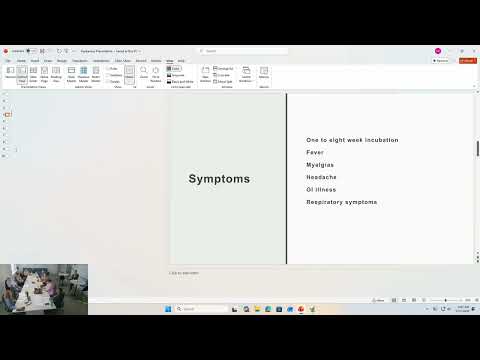
Why it matters: board members were briefed on how the virus transmits, the long incubation window and how that complicates contact tracing and testing. The Medical Director cautioned that early recognition and supportive care improve outcomes, but there is no specific antiviral therapy.
In the briefing, the Medical Director outlined transmission pathways and diagnostic challenges: exposure is most often from aerosolized rodent urine, droppings or saliva in poorly ventilated spaces; PCR testing can detect viral RNA but may require repeat testing for confirmation. "You can find it by PCR, which is a good test but isn't quick," the Medical Director said, describing instances of initial positive tests that later retested negative and the need to continue isolation and repeat tests.
Members asked about pets and cleaning protocols. In response, the Medical Director advised that pets are not commonly implicated and that the primary risk is rodent exposure. For cleaning, the Medical Director recommended moistening contaminated areas before cleaning to avoid stirring up infectious dust: "One of the precautions in cleaning is to moisten everything so it doesn't really stir up the dust that you're gonna inhale," the Medical Director said.
The board also discussed a recent cruise-ship cluster noted in national reports. The Medical Director summarized public reports that included several confirmed cases and fatalities and cautioned that available information remained incomplete. "There's 10 confirmed cases, 3 mortalities," the Medical Director said when summarizing press reports and noted continued investigation and isolation of exposed U.S. passengers.
The board was advised to emphasize ventilation, rodent exclusion in homes and workplaces, and basic infection-control measures for staff conducting environmental inspections. The Chair asked staff to circulate written guidance for city inspectors and to consider PPE and cleaning guidance for staff who might enter enclosed, rodent-infested spaces.
The Medical Director closed the briefing by urging continued surveillance and public communication: given the long incubation period and nonspecific early symptoms, clinicians and public-health staff were asked to keep hantavirus on their differential diagnoses for severe unexplained respiratory illness and to report suspect cases promptly to the department.