Get Full Government Meeting Transcripts, Videos, & Alerts Forever!
Get email alerts on the Rental Licensing topic
No spam. Unsubscribe anytime.
Baltimore committee hears overhaul of rental licensing, delays vote as tenants press for stronger enforcement
Summary
The Housing and Economic Development Committee reviewed a sweeping rewrite of the Rental Dwelling Health and Safety Enforcement Act that would add receivership, inspector licensing and audits; sponsors and agencies disagreed on notice, capacity and system integration. No vote was taken.
The Housing and Economic Development Committee on Monday reviewed a rewritten version of Council Bill 250141, the Rental Dwelling Health and Safety Enforcement Act, but recessed without a vote after lengthy debate over operational capacity, tenant notice and data systems.
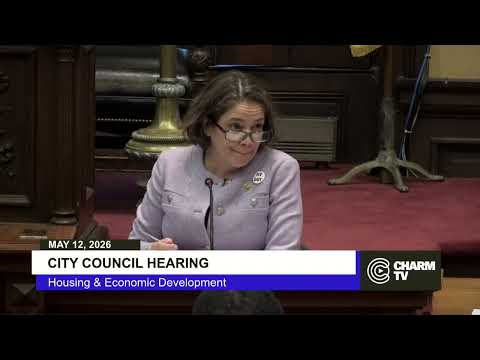
Councilwoman Odette Ramos, the bill sponsor and vice chair of the committee, said the overhaul aims to raise licensing rates, curb fraud by third‑party inspectors and create a rental‑property receivership for the most egregious violators. "We have about 40% of our rental units don't have licenses," Ramos said, describing amendments that add photographic evidence to inspection reports, audits and a licensing program for rental inspectors.
The sponsor said the receivership provisions — which would allow a court‑appointed receiver to bring a building up to code and sell it — would take effect 30 days after the ordinance is signed, with the remainder of the ordinance set to take effect Dec. 1. Ramos said the bill keeps existing standard fines at $1,000 for now while the city completes a Finance Department study of fines and fees.
City agencies raised operational and legal questions. Deputy Commissioner Hessler of the Department of Housing and Community Development (DHCD) told the committee that requiring individualized tenant notices after a receivership filing could be onerous and suggested property posting as an alternative, and flagged the need to be explicit about receiver powers including rent collection and eviction actions. "There may be some alternative work there instead of having to give notice to each tenant," Hessler told the committee.
Committee Chair James Torrance pressed for concrete, operational fixes after members described cases where vacant building notices (VBNs) and permitting data failed to prevent wrongful licensing. Torrance asked for a timeline to make permitting, code enforcement and VBN records interoperable so a property with an open VBN cannot improperly receive a rental license.
Several amendments create a registry and a new licensing track for rental inspectors, add a photo requirement to inspection reports, and mandate DHCD audits of inspections. Ramos said the bill would require DHCD to audit "at least a 100" inspections each year and automatically audit properties that receive post‑license violation notices; she and colleagues debated whether that baseline should be much larger given roughly 60,000 rental units in the city.
Public testimony split largely along tenant‑advocate and landlord lines. Tenant Gloria Vincent described years of unresolved mold, rodents and other hazards at her building and urged immediate revocation of her landlord's license. "My landlord license should be revoked as soon as possible," Vincent said, asking the city to provide temporary housing during abatement.
Etrissa, executive director of Baltimore Renters United, told the committee, "No tenant should have to beg for safe conditions," and urged enforcement capacity to match the new powers in the bill. Samantha Gowing of the Public Justice Center warned the committee that licensing must not become a "rubber stamp" and urged robust oversight of private inspectors.
Landlord witnesses said enforcement without funding and administration would punish compliant owners. Jack Bevere, a private landlord, warned that without sufficient staffing and systems the measures risked being "a bunch of nice words" with little street‑level effect, and cited a previous estimate that expanding enforcement could add roughly $1.8 million in costs. Online witness John Stockton, a realtor and small landlord, said some provisions "make compliance success and safety less likely."
No formal motion or vote was held. Ramos said the committee would continue refining the amendments and return to vote after agencies provide fiscal and operational responses and the committee completes follow‑up requests, including timelines for system integration and DHCD staffing needs.
The committee recessed the hearing and scheduled a follow‑up meeting to receive agency reports and revised amendments.