Get Full Government Meeting Transcripts, Videos, & Alerts Forever!
Get email alerts on the School Safety topic
No spam. Unsubscribe anytime.
Debate in Minnesota committee over $4M school perimeter weapon-detection pilot
Summary
The House Public Safety Committee heard testimony for and against HF 3753, a $4 million pilot to test AI-enabled perimeter weapon detection at one school per congressional district; proponents cited proactive threat detection, while civil-rights and disability advocates warned of bias, privacy risks and unclear procurement and data-retention rules.
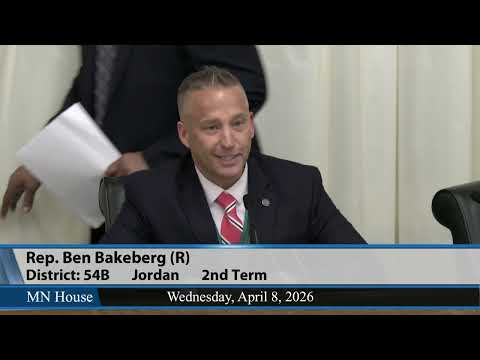
Representative Baker introduced House File 3753 as a school-safety pilot to identify, prevent and respond to threats outside school buildings, proposing a $4 million appropriation to test vendor systems in eight schools (one per congressional district).
The bill would direct the Department of Public Safety's Office of Justice Programs, in consultation with the School Safety Center, to contract with vendors that provide advanced threat-anticipation systems, real-time monitoring and rapid-response coordination. "The simple goal of this bill is to keep threats outside of our school buildings," Representative Baker said. The bill requires districts with existing infrastructure to be ineligible and requests a report due Jan. 15, 2027.
Dr. Timothy Childs, a testifier who described adapting millimeter-wave and camera technologies from military use, told the committee the system "does not obtain person or student data" and can "search for seen and unseen weapons" at school perimeters, automatically alerting authorized responders and school officials. He said the system is "discreet" and intended to avoid disrupting the school environment.
Opponents, including disability-rights and civil-rights advocates, strongly challenged those claims. John Miller, policy counsel at ACLU Minnesota, testified in opposition and said the organization's research finds "no evidence" that surveillance technology makes schools safer and warned of documented harms: increased student anxiety, underreporting of abuse, and disproportionate discipline for BIPOC and disabled students. Martin Christensen Hofer, executive director of a multicultural advocacy group, said peer-reviewed research is scarce and cited evidence of bias and misidentification in AI tools.
Committee members focused questions on technical limits and civil-liberties implications: could the system distinguish lawful permit holders walking past a school, would it use facial recognition, what data would be retained, and how would false positives be handled? Sponsors and vendors said detection targets weapons and notifications go to authorized school officials under existing safety plans; facial recognition is optional and not required by the bill. Representative Baker said building principals would be notified and would meet with individuals if an alert occurred to determine whether an incident was a false positive.
Cost and scale drew scrutiny. Sponsors said the $4 million funds an eight-school pilot (about $500,000 per school) to gather data before any broader rollout; critics questioned whether the pilot should proceed without statutory privacy, retention and procurement guardrails and asked why the bill had not gone through education-related committees.
The committee heard multiple public comments urging caution, asking for transparency about vendor selection and procurement, and calling for more investment in counselors and evidence-based prevention strategies. After testimony and member discussion, Representative Baker laid HF 3753 over for further work.
The committee did not take a final vote on the policy or appropriations; next steps include drafting clarifying language on data practices, procurement transparency and whether additional committee stops are appropriate.