Get Full Government Meeting Transcripts, Videos, & Alerts Forever!
Get email alerts on the Procurement Policy topic
No spam. Unsubscribe anytime.
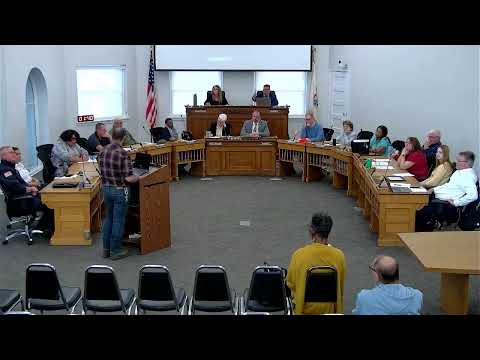
Director outlines major rewrite of Freeport purchasing policy as aldermen debate $25,000 threshold
Summary
Director Richtor presented a complete rewrite of Freeport's purchasing policy (last written in 2007), proposing new approval tiers, purchase-order rules and automatic competitive bidding at $25,000; aldermen pressed for clearer oversight and documentation requirements.
Director Richtor presented a draft overhaul of the City of Freeport’s purchasing policy and told the council the current policy — "written in 2007" — needs a full update to reflect rising costs and modern procurement practices. He proposed new approval tiers, purchase-order requirements and a rule that purchases of $25,000 or more would require city council approval and competitive bidding.
The draft divides the policy into chapters covering an introductory statement, a purchasing code of ethics, competitive bidding rules, sole-source purchases, emergency purchases and procurement procedures. "The goal of the policy is to assist our staff with procuring quality goods and services at the lowest possible price in an impartial consistent manner with the highest standards of public service," Richtor said.
Why it matters: the proposed thresholds change who can approve purchases and when an item must come before council. Under the draft, department directors could authorize purchases under $5,000; department director plus finance director could approve up to $10,000; department director, finance director and city manager would sign off up to $24,999.99; purchases above $25,000 would require council approval and competitive bidding in line with a state statute, Richtor said.
Council members asked for concrete examples and raised oversight concerns. "Twenty-five thousand without city council approval is not a number," Alderman Simmons said, arguing the council exists to oversee large purchases. Alderman Clem cited a recent airport roof repair of about $10,600 as an example of work that has moved through council and suggested clearer in-house handling for routine repairs.
Staff provided inflation examples to justify threshold changes: Darren said "concrete alone I think went from $100 to about $175" and that many water- and sewer-related parts have roughly tripled in price, noting a curb stop used to cost about $20 and now costs about $90.
Richtor outlined several operational changes in the draft: a purchasing-code-of-ethics section limiting gifts from suppliers; a requirement that new vendors provide a W-9; a purchase-order requirement for purchases over $5,000; a documented quoting process (one verbal quote, three quotes, written quotes at escalating thresholds); sole-source and emergency-purchase rules; and change-order notification when contract costs increase by $25,000 or project time extends more than 180 days.
Richtor said the policy will be presented as an ordinance requiring two readings; he intends to bring it to first reading at the council's first June meeting and will circulate a full draft to council members in advance. "You'll have the whole thing," he said.
What was not decided: council did not vote on the policy during the meeting. Several aldermen asked for additional detail on department-level authority, documentation (forms for quotes), and whether routine budgeted purchases should bypass repeated council review. Staff said purchases must be in an approved budget to be executed and that sign-offs are intended to ensure that.
Next steps: staff will provide the draft to council members, including the purchase-order forms and the full text of the ordinance for the first reading in June. The council may schedule committee discussion or additional readings before final adoption.