Get Full Government Meeting Transcripts, Videos, & Alerts Forever!
Get email alerts on the Lake Andrew Lid topic
No spam. Unsubscribe anytime.
Public divided at Kandiyohi County hearing over proposed Lake Andrew improvement district
Summary
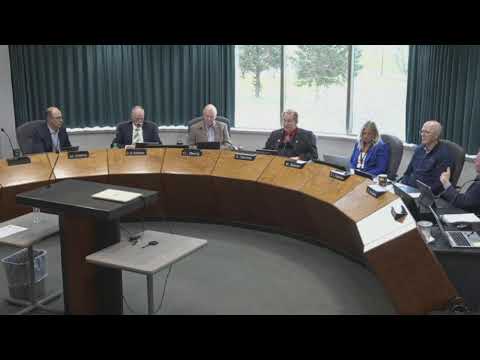
Dozens of Lake Andrew property owners spoke at a May 5 public hearing as Kandiyohi County staff confirmed a petition met statutory signature thresholds. Supporters cited donor fatigue and need for stable funding for invasive‑species control; opponents raised cost, equity and governance concerns. The board will decide May 19.
County officials heard more than an hour of public comment May 5 on a petition to form a Lake Andrew Lake Improvement District, a locally governed taxing entity the petitioners say is needed to pay for aquatic invasive‑species (AIS) control.
Kandiyohi County Auditor Lisa Weiss told the County Board the petition, submitted by the Lake Andrew Improvement Association, met the requirements of Minnesota Statute 103B.521 and Minnesota Rule 6115.950. Weiss said county staff identified 165 parcels coded with lake access (13 were DNR‑owned), counted one signature per parcel and verified owners against GIS records; 85 signatures were verified, representing about 55% of the private parcels on the lake. Weiss said the Department of Natural Resources provided an advisory report finding the petition’s purpose and activities eligible for LID creation and noting the proposed boundaries were sufficient.
"The petition meets the requirements of Minnesota Statute 103B.521," Weiss said, and the board will take no action at the May 5 hearing; a decision is scheduled for the county board meeting on May 19.
Public testimony was sharply divided. Supporters said voluntary fundraising and ad‑hoc efforts had become unreliable and that a district would ensure continuing, coordinated action. "After our second year of trying to get $50,000 worth of donations to handle this … I think the LID is the best way to share it under current situations," said Randy Arheart, a Lake Improvement Association member.
Proponents also described donor fatigue and the technical constraints of DNR permits limiting acres treated. "We've seen invasive species increase," said Randy Allayben, noting grants and a county AIS task force that supported prior work have waned. Several speakers framed a LID as an "insurance policy" to protect property values and tourism that depend on water quality.
Opponents focused on cost uncertainty, fairness and governance. Multiple residents from the Komo Beach area asked to be exempted because they already contract privately for treatments, arguing a blanket assessment would be "double taxation." Dave Kelly and others pressed for "guardrails," noting a petition reference to $50,000 but warning a LID could impose recurring or larger assessments: "A LID could last forever. It could be $50,000 a year. It could be $500,000. It could be a million dollars," Kelly said.
Environmental and liability concerns were also voiced. Chad Sheldall said treatments he had observed left water cloudy and cited research showing chemicals can settle into lake sediments; he urged more study and voluntary, mechanical approaches.
Speakers also raised equity questions about exempt parcels. Several commenters noted Sibley State Park and DNR‑owned shoreline were not assessed for the proposed LID, which, they argued, shifts a greater burden to private owners.
Lake association members and other supporters responded that DNR regulates allowable treatment acres and that inclusion of state land is complicated; proponents said the association has coordinated with DNR permits and that a LID could broaden capacity and funding.
What happens next: the board accepted public testimony and closed the hearing. No action was taken on May 5; the county board will consider whether to form the Lake Andrew Lake Improvement District at its May 19 meeting. County staff accepted written materials for the record through the end of business on May 5 and directed questions about petition details to the lake association’s executive committee.
Authorities and evidence cited at the hearing included Minnesota Statute 103B.521 and Minnesota Rule 6115.950 and a DNR advisory report provided in the board packet.
Ending: The petition met statutory filing thresholds according to county staff, but substantial public disagreement remains over cost allocation, exempt shoreline, and governance. The board will render a decision at its May 19 meeting; residents were encouraged to submit written comments to Administrator Baker before that date.