Get Full Government Meeting Transcripts, Videos, & Alerts Forever!
Get email alerts on the Drug Policy topic
No spam. Unsubscribe anytime.
Florida officials cite steep drop in drug deaths, credit SAFE grants and treatment programs
Summary
State officials released a 2025 interim medical examiner report showing a 19% statewide decline in drug‑related deaths and large drops in opioid and fentanyl deaths, which they attributed to a mix of interdiction (SAFE grants), treatment (CORE) and expanded Narcan access.
Florida officials said the state has seen substantial declines in drug‑related deaths, pointing to new interim data and coordinated enforcement and treatment efforts.
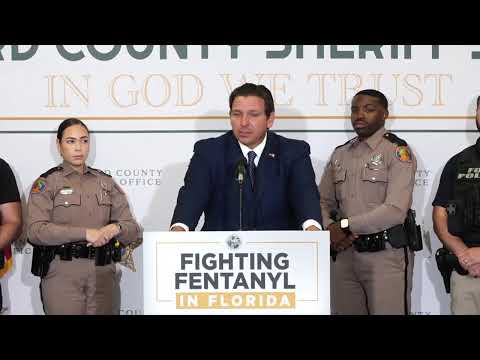
"The report shows statewide drug‑related deaths decreased by 19% in the most recent reporting period and opioid‑caused deaths dropped by 42% and fentanyl‑caused deaths specifically declined by 46%," Governor Ron DeSantis said at a press event in Brevard County, citing the Florida Medical Examiner's Commission interim report.
Why it matters: State leaders argued the reductions reflect a "full‑spectrum" approach combining interdiction, prosecutions, treatment and harm‑reduction tools. DeSantis and other officials credited the 2023 State Assistance for Fentanyl Eradication (SAFE) grant program, highway patrol interdictions and the CORE (Coordinated Opioid Response/Opioid Recovery) treatment initiative.
FDLE Commissioner Mark Glass said the numbers represent lives saved. "Under your leadership, we are saving lives," Glass said, noting the state began recording very high fentanyl deaths in 2021 and that ongoing data compilation is expected to show further declines.
Examples cited: Executive Director Dave Kerner of Highway Safety and Motor Vehicles described multiple interdiction cases by CIU troopers and K‑9 teams, saying typical seizures included hundreds of fentanyl pills, multiple‑pound cocaine hauls (examples cited ranged from dozens to hundreds of pounds), methamphetamine and large cash recoveries. Kerner said such traffic‑stop seizures illustrate how interdiction on highways removes supply that would otherwise reach communities.
Corrections and treatment: Ricky Dixon, secretary of the Florida Department of Corrections, emphasized staffing needs for corrections employees and said Florida's recidivism rate is among the lowest in the nation, framing reduced recidivism as both a public‑safety and taxpayer benefit. Officials also described the CORE program, which aims to stabilize people after overdose and connect them with post‑hospital services, and noted wider Narcan distribution as an element of demand‑side and harm‑reduction work.
What officials said about SAFE: The governor summarized SAFE program results, saying the program has supported large‑scale operations with "about 3,000 arrests, roughly 600 pounds of fentanyl and 65,000 fentanyl pills" seized, along with cocaine, methamphetamine, firearms and millions in cash. Officials cautioned these figures are program totals and gave them as examples of enforcement activity tied to the statewide strategy.
What happens next: Officials urged the legislature to fund career development and pay increases for sworn state personnel and troopers to sustain recruitment and retention, including DeSantis's recommendations for additional budget support during the special session.
The event gathered local and state public‑safety leaders to present the report and defend continued funding for enforcement and treatment initiatives; officials said the interim report and preliminary 2024–25 data strengthen the case for continued investment.