Get Full Government Meeting Transcripts, Videos, & Alerts Forever!
Get email alerts on the State Budget topic
No spam. Unsubscribe anytime.
Norfolk officials outline state budget and legislation affecting city priorities, including a $50 million non‑federal match request
Summary
City government relations director briefed council on unresolved state budget differences, the city’s request for a $50 million non‑federal match fund for resilience projects, a city‑charter change affecting pre‑1950 properties, and a recently signed tenant-protection law that requires landlords to break out base rent and utilities.
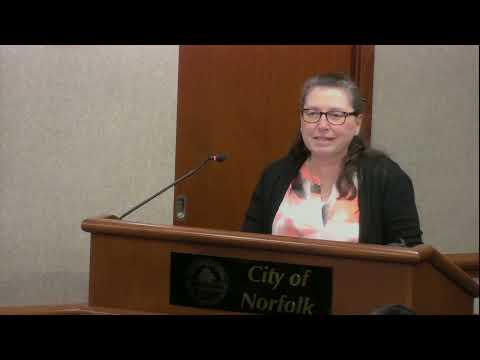
Brian Pennington, Norfolk’s director of government relations, told the City Council that several of the city’s legislative priorities remain unresolved because the House and Senate budgets still differ by about $1 billion.
Pennington described the city’s top priority this year as the creation of a non‑federal match fund to help pay the Commonwealth’s partnership share on the SRM (storm resilience/mitigation) project and similar large projects. He said the administration requested an initial $50 million in the state budget to establish the fund; that request became budget language in both chambers and will require final budget action by the governor to take effect.
He said other technical and permitting requests tied to the SRM project have been converted to budget authorization language; the city hopes that short‑term authorizations in the budget will allow roughly 10–12 near‑term permits to proceed while state agencies and regional partners work toward a longer‑term statutory solution.
Pennington also highlighted a change to the city charter approved by the General Assembly that would allow the city to address properties—often multifamily units built before 1950—whose zoning now conflicts with surrounding land uses and that pose nuisance or public‑safety concerns. He said that change was intended to create a path for bringing certain long‑held properties into compliance.
On housing policy, Pennington called the enactment of a tenant‑protections bill a notable win: the governor signed legislation that requires landlords of "all‑inclusive" rentals to provide tenants, upon request, a breakout of how much of the payment is base rent and how much covers utilities. Pennington said that change will enable some tenants to qualify for subsidy programs from which they were previously excluded.
Pennington summarized several other outstanding items tied to the budget and legislation, including debates over paid family and sick leave, collective bargaining, skill gaming, and the Prescription Drug Affordability Board. He told the council the governor has 30 days from the General Assembly’s passage to act on pending legislation (Pennington cited May 22 as the administration’s internal action deadline), and that the assumed effective date for most legislation that passed is July 1, 2026.
Councilmembers thanked staff and state delegates for advancing eviction‑mitigation measures; members also emphasized that delays in the state budget would have material local consequences for programs dependent on state funding. Pennington said the administration will monitor outcomes closely and return with any required follow‑up.